
Morocco is small enough to cross by road and varied enough that every few hours the landscape changes completely. These are the places most of our itineraries are built around, and why each one earns its place.
Marrakech — the Red City
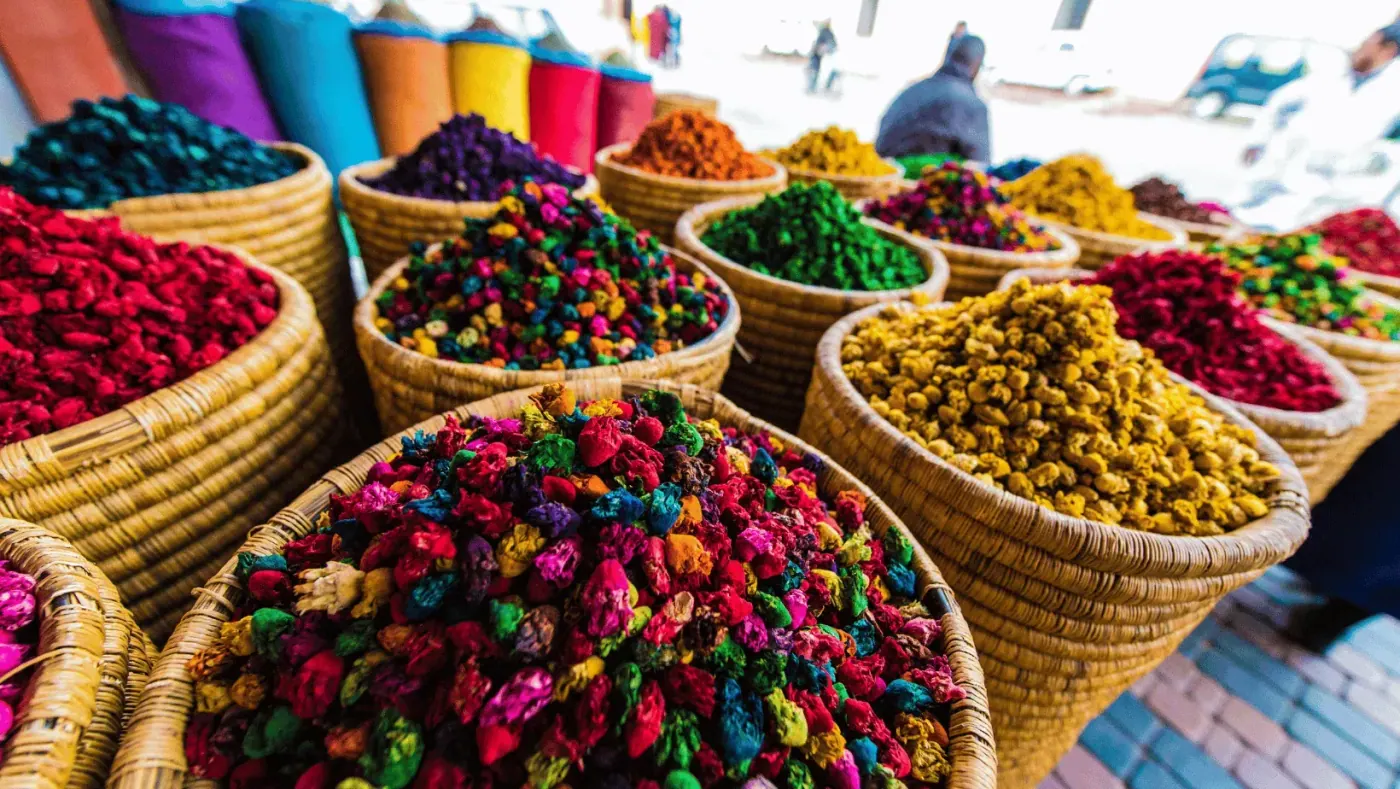
Most trips start here. Marrakech is Morocco’s second city and its noisiest pleasure: a walled medina of souks and palaces, the Koutoubia minaret visible from almost everywhere, and Jemaa el-Fna filling with food stalls each evening. Do not try to see all of it. Pick a few sights, and leave time to wander — the wandering is the experience.
Chefchaouen — the Blue City
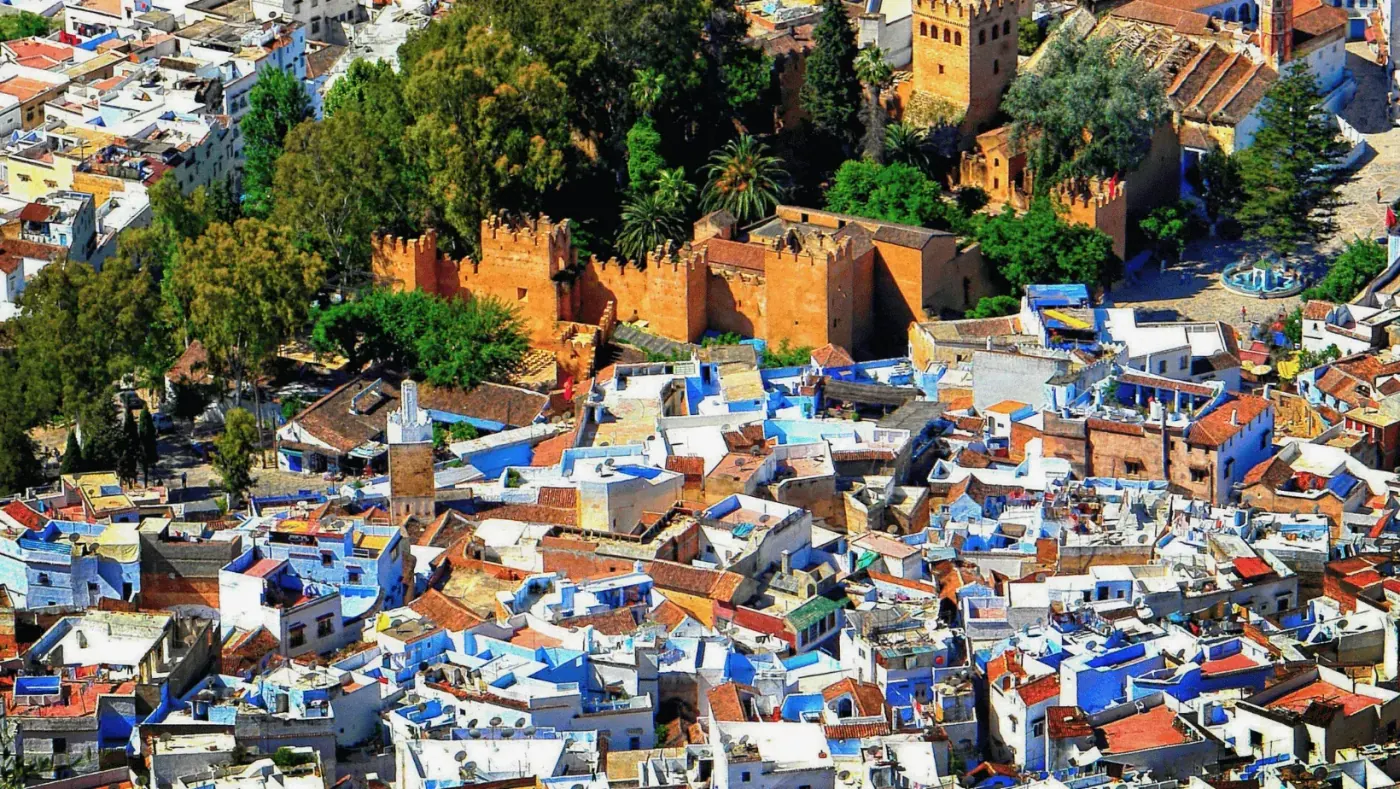
Tucked into the green Rif mountains in the north, Chefchaouen is painted in every shade of indigo and is far calmer than the imperial cities. A day and a night is enough to walk the medina, climb to the Spanish Mosque for sunset over the rooftops, and buy the wool blankets and goat cheese the town is known for. It pairs naturally with Fes or Tangier.
Merzouga and the Erg Chebbi dunes
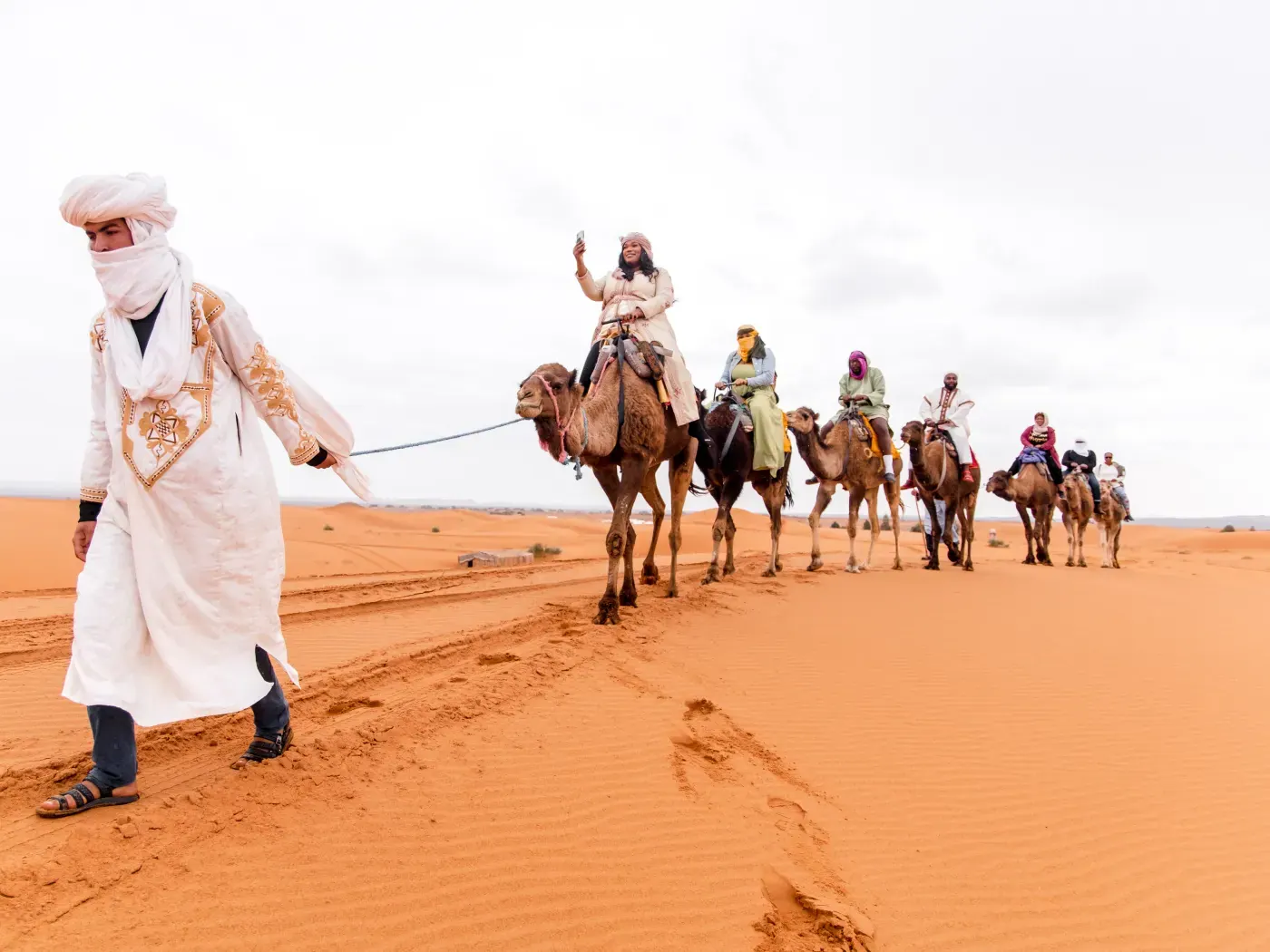
This is the Sahara most people picture: orange dunes rising 150 m out of flat desert. It is a long drive — roughly ten hours from Marrakech — so it is almost always done over several days with a night in the Dades or Todra gorges on the way. You arrive in the late afternoon, ride a camel over the crest for sunset, eat in a camp and wake early, because sunrise over Erg Chebbi is the thing you will actually remember.
Essaouira — the windy coast
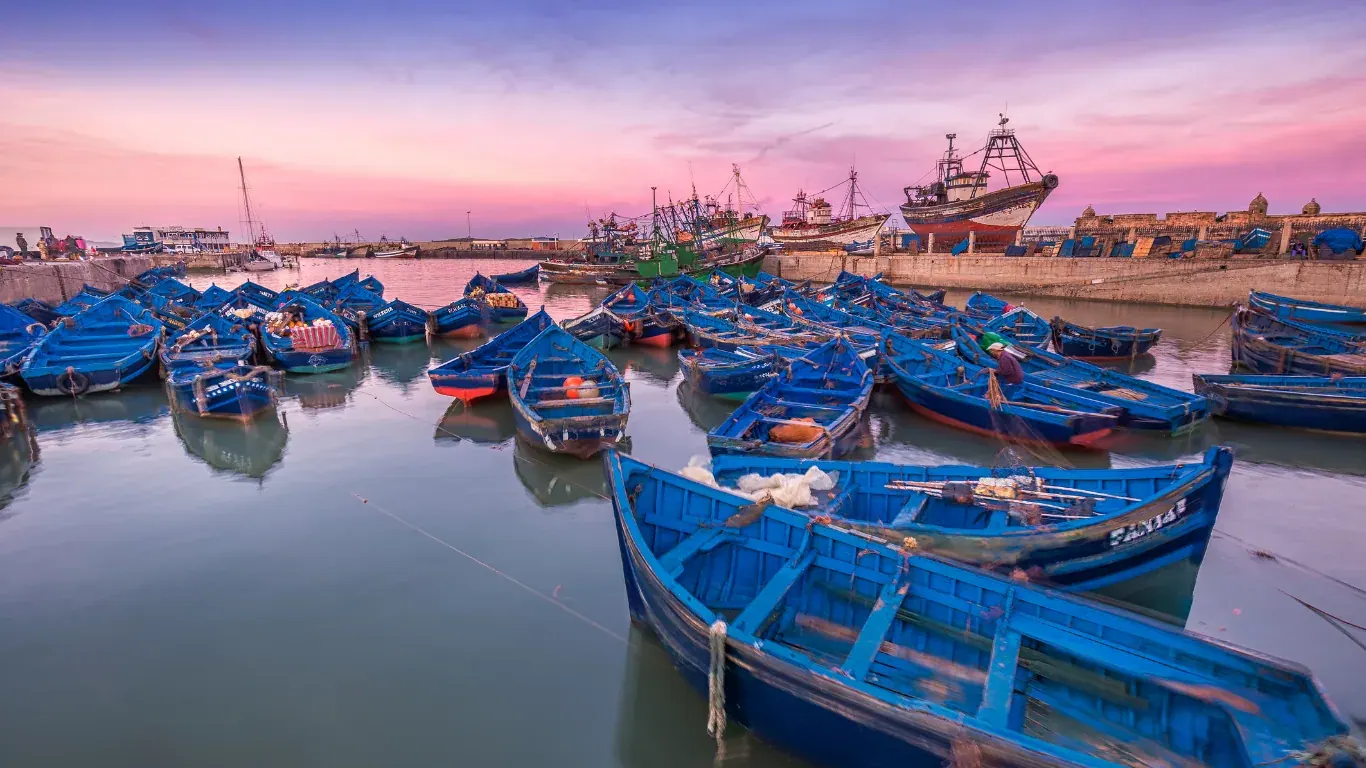
Whitewashed walls, blue shutters, ramparts over the Atlantic and a working fishing port. Essaouira’s medina is UNESCO-listed, the seafood comes straight off the boats, and the trade winds that make it awkward for sunbathing make it excellent for surfing and kitesurfing. It is an easy day trip from Marrakech, but better as an overnight.
Ait Ben Haddou and Ouarzazate
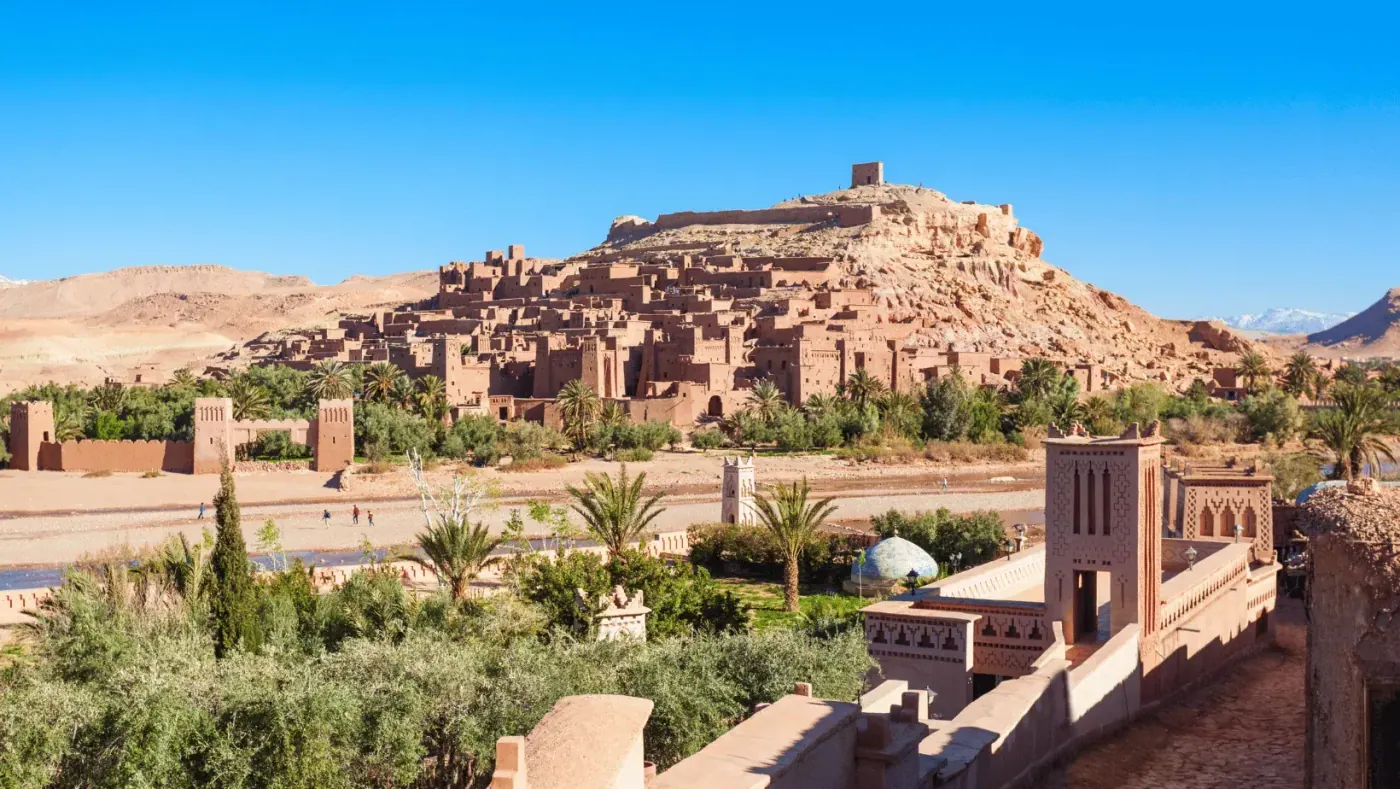
The fortified ksar of Ait Ben Haddou rises out of the valley in stacked earth towers and is the most photographed building in Morocco — you have seen it in Gladiator, Lawrence of Arabia and Game of Thrones. Ouarzazate, half an hour on, is the industry town behind it, with working film studios and the Taourirt Kasbah. Both sit on the main road between Marrakech and the desert.
Fes — the oldest of them all
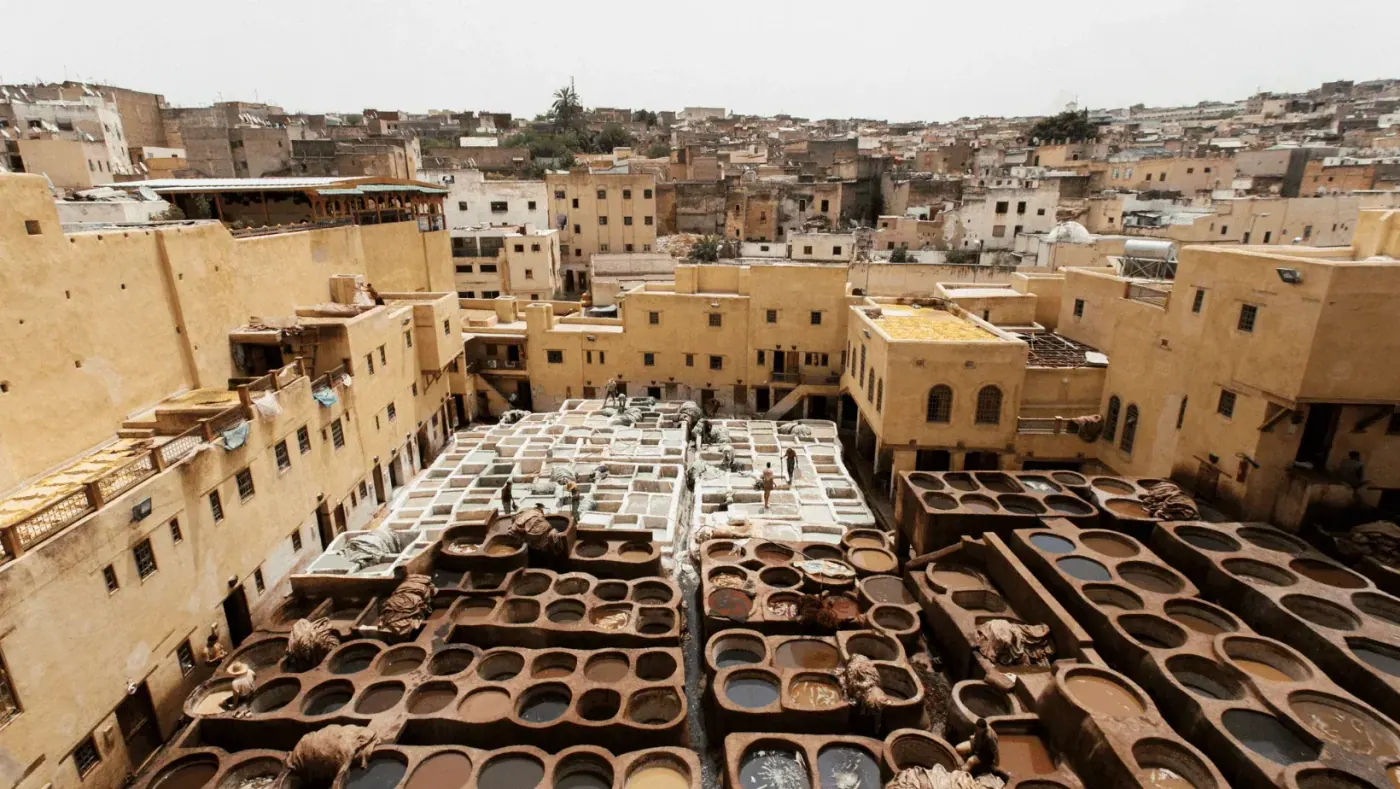
Founded in 789, Fes has the largest car-free urban area in the world and a medina that genuinely requires a guide the first time. The tanneries, the El-Attarine madrasa and the Al-Qarawiyyin quarter are the set pieces, but the real appeal is that the crafts are still practised — potters, dyers and tanners working as they have for centuries rather than performing for visitors.
The Dades and Todra gorges
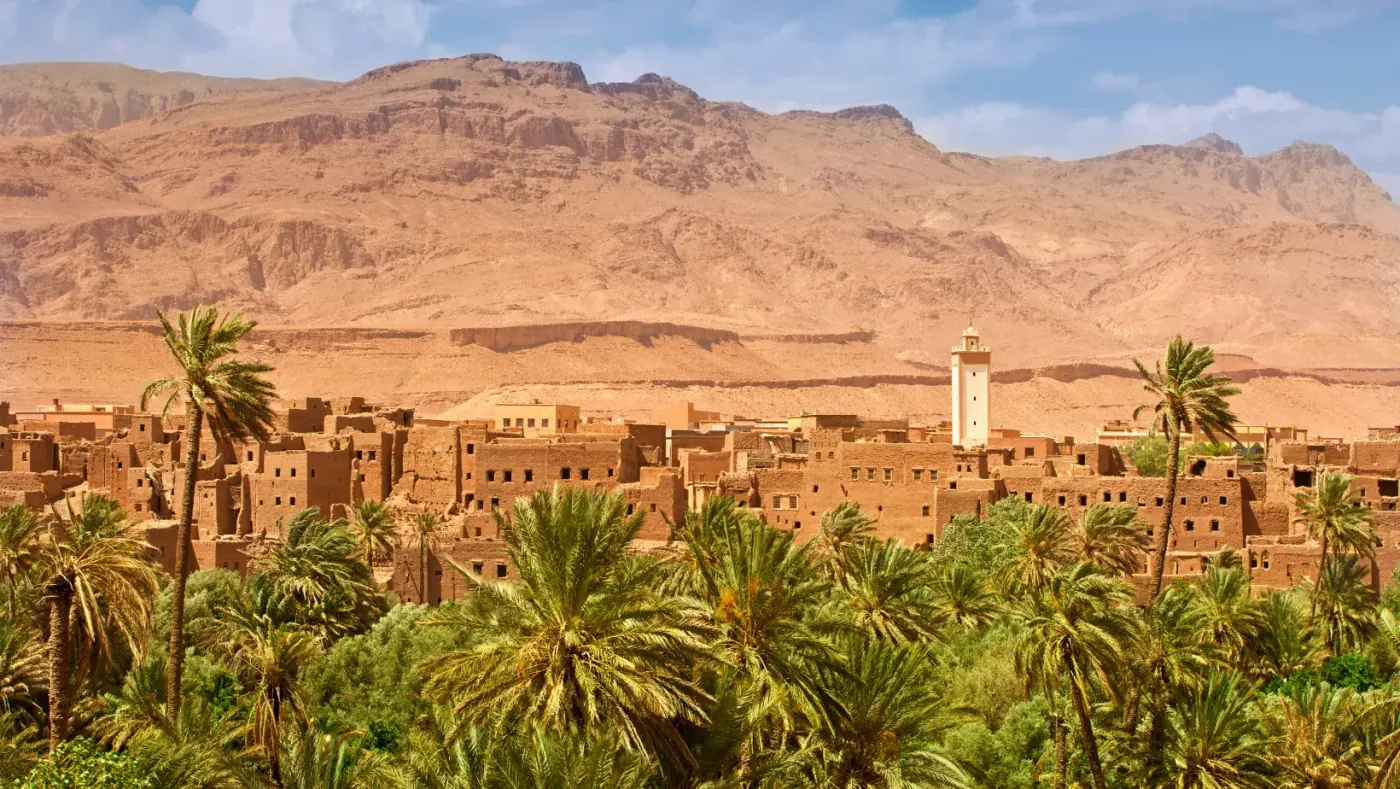
Between the kasbah road and the desert, two river canyons cut deep into the rock. Todra is the dramatic one — 300 m cliffs closing to a narrow gap with a cold river running through it. Dades is wider and stranger, with eroded rock formations and a switchback road climbing out of the valley. Most desert routes overnight in one or the other.
How to link them
The classic loop runs Marrakech – Ait Ben Haddou – Dades – Merzouga and back, in three to five days. Add Fes and you have a one-way crossing rather than a loop. Add Chefchaouen and the north and you are looking at eight to twelve days. Distances are long, so it is usually better to see fewer places properly than to spend the week in the car.
How long you need to see the highlights
Morocco rewards a slower route than most people plan. As a rough guide: one week gets you one city plus the Sahara, or two cities without the desert. Ten days is where the classic loop starts to work — Marrakech, the Atlas, Merzouga and Fes — without long days in the car. Two weeks adds the coast, Chefchaouen and the north at a genuinely relaxed pace.
The mistake we see most is treating Morocco like a small country. Marrakech to Fes across the desert is roughly 1,000 km of mountain and desert road; it is a superb drive, but it is not a day trip. Building in fewer stops and longer stays almost always produces a better trip than ticking off more places.
Best time of year to travel
Spring and autumn are the strongest all-round seasons: comfortable in the cities, warm but bearable in the desert, and the Atlas passes are clear. Summer is intense inland — Marrakech and Fes regularly pass 40°C — but the Atlantic coast at Essaouira stays breezy and cool, which is why Moroccans themselves go there in August.
Winter is underrated. The desert is crisp and clear with genuinely cold nights, the cities are quiet, and the High Atlas carries snow. Pack layers whatever the season: a 25°C afternoon in Merzouga can become a 5°C night under the dunes.
Linking the highlights into one route
Most travellers pick one of two shapes. The loop starts and ends in Marrakech, running south over the Tizi n'Tichka pass to Ait Ben Haddou, along the Road of a Thousand Kasbahs through Dades and Todra, out to Merzouga, and back. It is efficient and needs only one flight route.
The crossing runs one-way between Marrakech and Fes through the same desert, letting you fly into one city and out of the other with nothing repeated. It costs a little more because the vehicle ends far from base, but it packs more variety into the same number of days. Add Chefchaouen and the coast on top of either if you have two weeks.
Frequently asked questions
Most travellers name the Erg Chebbi dunes at Merzouga or the blue lanes of Chefchaouen. For architecture it is usually Ait Ben Haddou or the Fes medina. They are very different experiences, which is why most routes include more than one.
Seven days covers one city plus the Sahara. Ten days is the comfortable minimum for the classic Marrakech, desert and Fes loop. Two weeks lets you add Chefchaouen and the Atlantic coast.
Drive, for almost everything. The landscape between the cities is much of the point, and the desert cannot be reached any other way. Flying only makes sense between the far north and the far south when time is very short.
April, May, September and October give the best balance of weather across cities, mountains and desert. March and November are close behind and quieter.
It is possible in seven days but it is tight, with long driving days. Nine or ten days makes the same route relaxed and gives you a full day in each city.
Want to see this for yourself?
Every one of our tours is private and shaped around you. Tell us your dates and we will put a route together — usually within 24 hours.