
Morocco sits on one of the busiest migration corridors on earth. Birds crossing between Europe and sub-Saharan Africa funnel through the Strait of Gibraltar, then spread out across lagoons, mountains and desert within a few hours’ drive of each other. For a birdwatcher, that concentration is the whole appeal: you can be scanning an Atlantic estuary at breakfast and looking for desert specialists the following morning.
Why Morocco punches above its weight
Around 500 species have been recorded in Morocco. The number matters less than the variety behind it — the country stacks Mediterranean, Atlantic, montane, steppe and Saharan habitats into a space you can cross by road in two days.
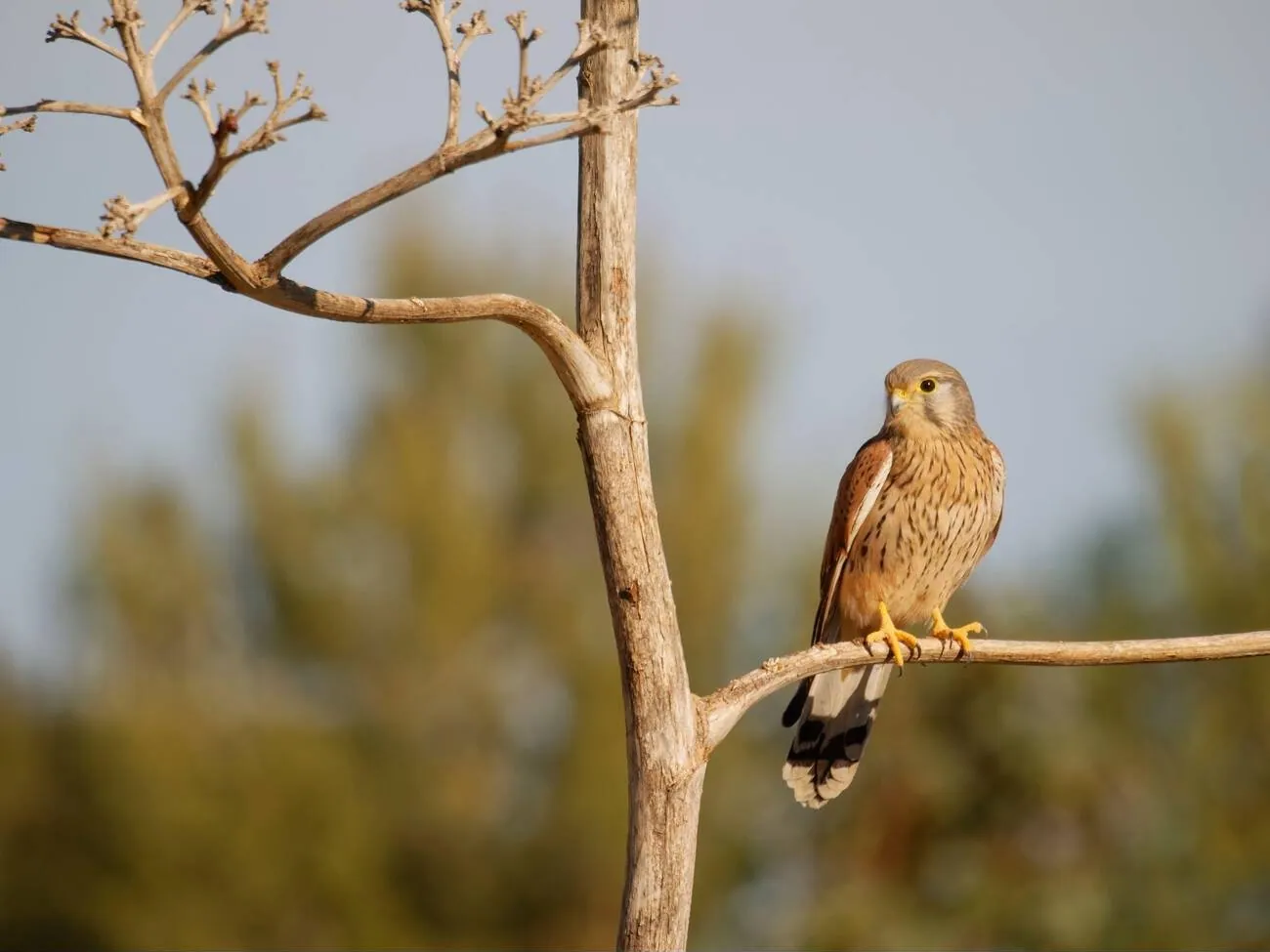
The Strait of Gibraltar is the narrowest crossing between Europe and Africa, and soaring birds that cannot travel long distances over open water use it as a bottleneck. In spring and autumn, raptors and storks pass over the north in numbers that are genuinely hard to believe until you have stood underneath them.
Souss-Massa and the northern bald ibis
If Morocco has one bird that draws people specifically, it is the northern bald ibis. The colonies along the coast within and around Souss-Massa National Park, south of Agadir, hold the only wild, self-sustaining population left in the world. Everywhere else the species has disappeared or survives only through reintroduction.
The birds feed on coastal steppe and nest on sea cliffs. Around Tamri, north of Agadir, they are often visible from the roadside in small feeding groups. It is an unglamorous bird by most standards — bald red head, dark iridescent plumage — and seeing it carries a weight that has nothing to do with beauty.
The park itself also holds marbled duck, Audouin’s gull and a good mix of waders where the Massa river reaches the sea.
Wetlands and lagoons on the Atlantic
Merja Zerga, on the coast between Rabat and Tangier, is Morocco’s most important wetland for wintering waterbirds. Flamingo, spoonbill, and large numbers of ducks and waders use it between November and February. It is also historically associated with the slender-billed curlew, a species now almost certainly extinct — a reminder that these sites matter.
Further south, Oualidia and the Sidi Moussa lagoons offer easier access and similar species. Sidi Boughaba, a freshwater lake near Kenitra, is a different habitat again and worth a morning for marbled duck and passerines in the surrounding woodland.
Dakhla, far down the Atlantic coast, rewards anyone prepared to make the journey with a genuinely different list, including species that barely reach the rest of the country.
Mountain birds in the High and Middle Atlas
Altitude changes the list completely. The cedar forests of the Middle Atlas around Azrou and Ifrane hold Levaillant’s woodpecker, a North African endemic, along with firecrest and hawfinch. The Barbary macaques in the same woods are an easy bonus.
Higher still, the Oukaïmeden plateau above Marrakech is the classic site for crimson-winged finch, alpine chough and Atlas horned lark. In summer the road up is straightforward; in winter it becomes a ski area and access depends on conditions.
Moussier’s redstart deserves a mention on its own. Restricted to northwest Africa, it is common enough in scrubby hillsides across Morocco that most visiting birders see it within a day or two, and it is one of the most striking small birds in the region.
Desert species around Merzouga and the south
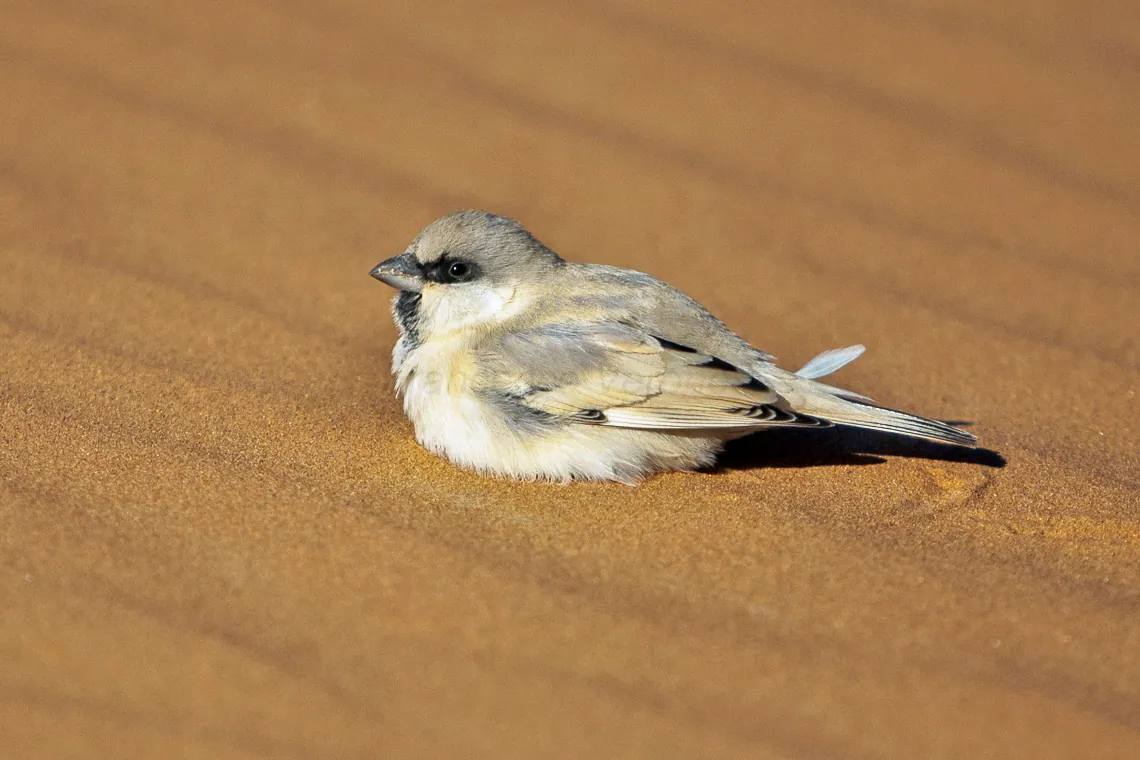
The Sahara asks for patience and rewards it with birds that exist almost nowhere else in the Western Palearctic. The area around Merzouga and the Erg Chebbi dunes is the most reliable base: desert sparrow, hoopoe lark, brown-necked raven, and with luck the Egyptian nightjar around the seasonal lake at Dayet Srji when it holds water.
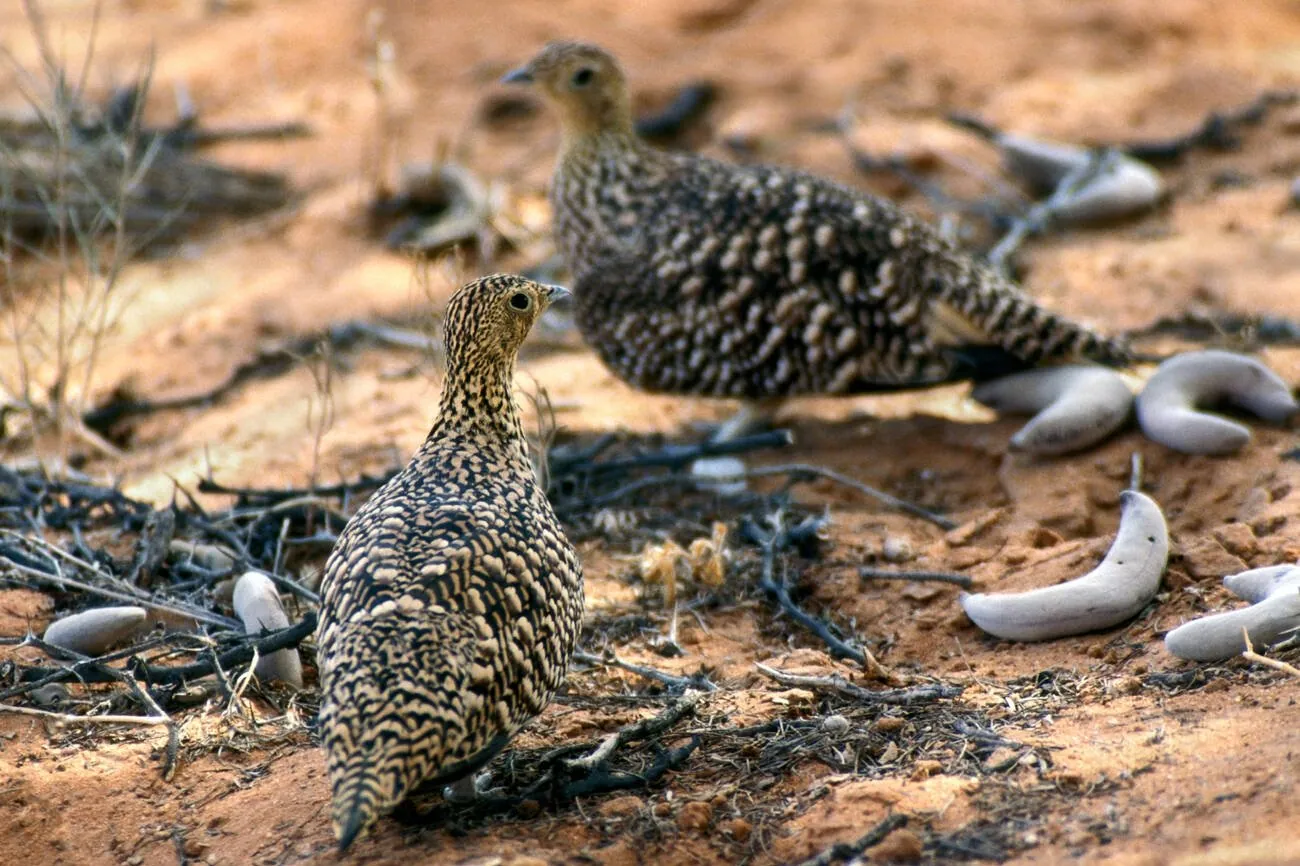
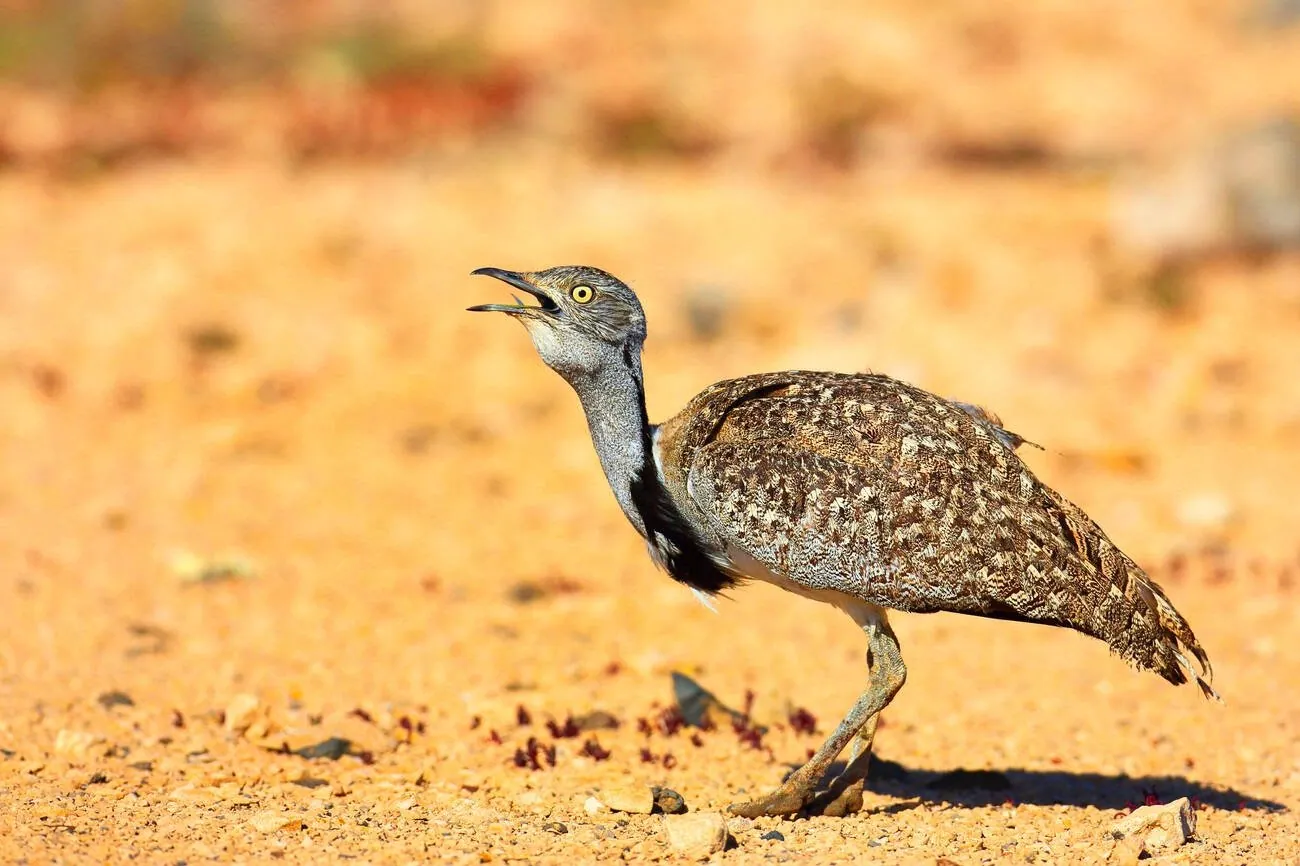
The stony hammada between Boumalne Dades and Tagdilt is a different desert habitat and the classic site for cream-coloured courser, thick-billed lark and red-rumped wheatear. Early morning is essential; by midday the heat haze makes distant identification pointless.
A 4x4 helps enormously here, less for the dunes than for reaching the flat gravel plains where these species actually live.
When to go
March to May is the strongest overall window. Resident species are breeding and singing, spring migration is running, and the desert is workable before the summer heat arrives.
September to November brings the return migration and is the better time for the Strait of Gibraltar raptor passage. November to February suits the Atlantic wetlands, when wintering waterbird numbers peak.
July and August are difficult inland. Desert birding at 45°C is limited to the first two hours after dawn, and most people find the coast a better use of the time.
Practicalities for a birding trip
Distances are the main planning constraint. Souss-Massa to Merzouga is a full two days of driving; trying to combine the Atlantic coast, the Atlas and the Sahara in under a week means seeing all three badly.
A driver-guide is worth more here than on a standard tour, simply because you can stop where the birds are rather than where the parking is. Our vehicles are enclosed 4x4s with air conditioning, which matters when you are sitting still scanning a plain in the middle of the day.
Bring your own optics. A telescope is genuinely useful for the lagoons and the desert plains, and there is nowhere to rent one locally.
Frequently asked questions
Around 500 species have been recorded. The appeal is less the total than the range of habitats — Atlantic wetlands, cedar forest, high mountains and true Sahara all within a few hours of each other.
Along the coast in and around Souss-Massa National Park south of Agadir, and near Tamri to the north. This is the only wild self-sustaining population left in the world.
March to May for breeding residents and spring migration, September to November for the return passage, and November to February for wintering waterbirds on the Atlantic wetlands.
Not necessarily, but a driver who knows the sites saves a great deal of time, particularly on the desert plains where the birds are spread thinly and access roads are unmarked.
Yes. The Dades and Merzouga sites sit directly on the standard desert route, so a conventional itinerary can include early-morning birding stops without adding days.