
The three-day crossing from Marrakech to Fez is the most popular route we run, and the most misunderstood. It is not a relaxed tour. It is a long, spectacular drive with a night in the Sahara in the middle, and it works brilliantly if you know what you are signing up for.
Day 1: Marrakech to the Dades valley
You leave Marrakech in the morning and climb almost immediately into the High Atlas. The Tizi n’Tichka pass tops out above 2,200 metres, and the road has been rebuilt in recent years — it is a good surface, but it is still mountain driving with continuous bends.
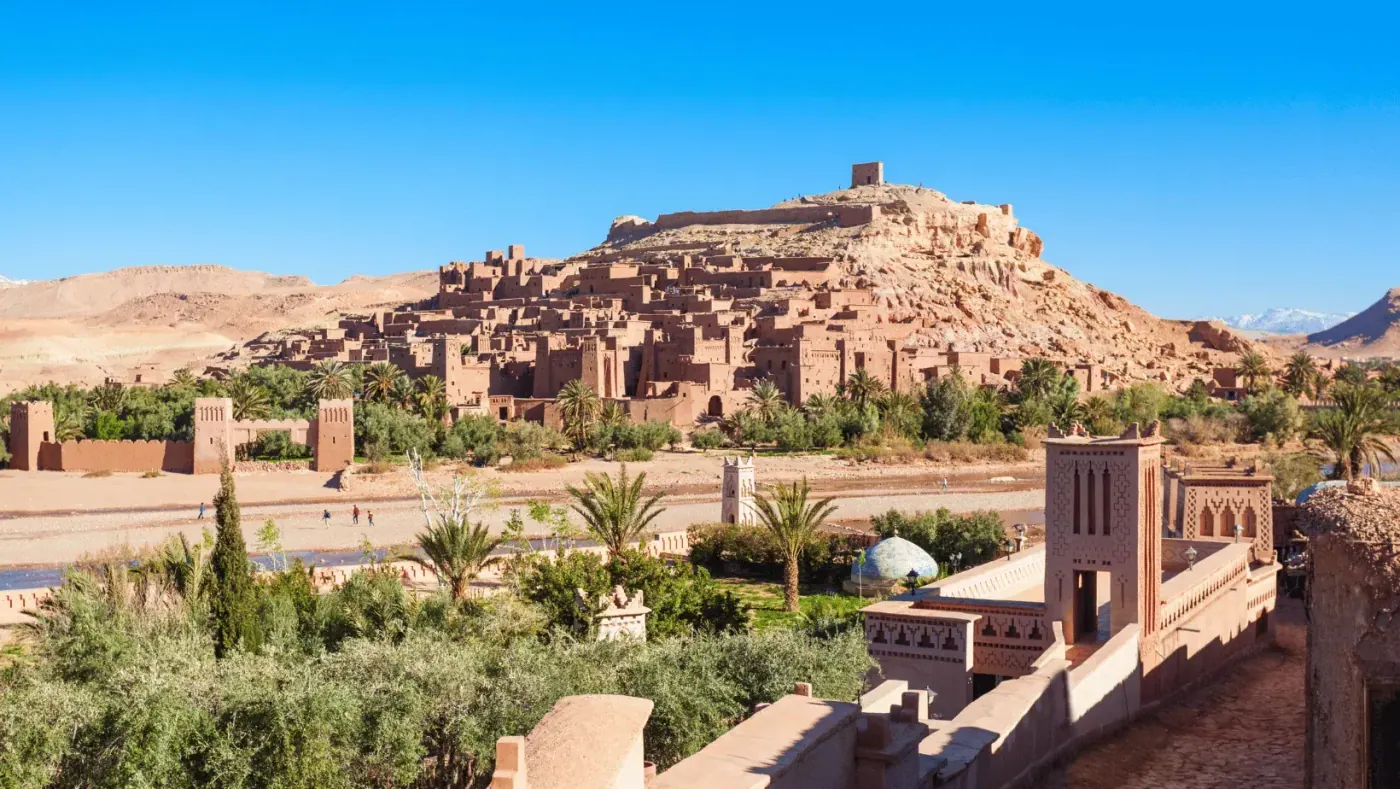
On the far side the landscape changes completely, from the ochre plains around Marrakech to bare rock and deep valleys. The first major stop is Ait Ben Haddou, the fortified earthen village that is a UNESCO World Heritage Site and a fixture of international film production. An hour there is enough to walk up through the ksar and back.
From Ouarzazate the road runs east through the Skoura palm oasis and the Valley of Roses, reaching the Dades valley in the late afternoon. Total driving is around seven hours with stops. You sleep in a kasbah-style hotel in the valley.
Day 2: Todra Gorge and the road to Merzouga
The second morning is the shortest drive of the trip. Todra Gorge is roughly an hour away, where limestone walls rise 300 metres on both sides of a valley floor narrow enough to walk across. An hour there on foot is the right amount.
After Todra the route turns south-east and the land flattens and empties. You pass through Erfoud and Rissani, and the first dunes of Erg Chebbi appear on the horizon well before you reach them.
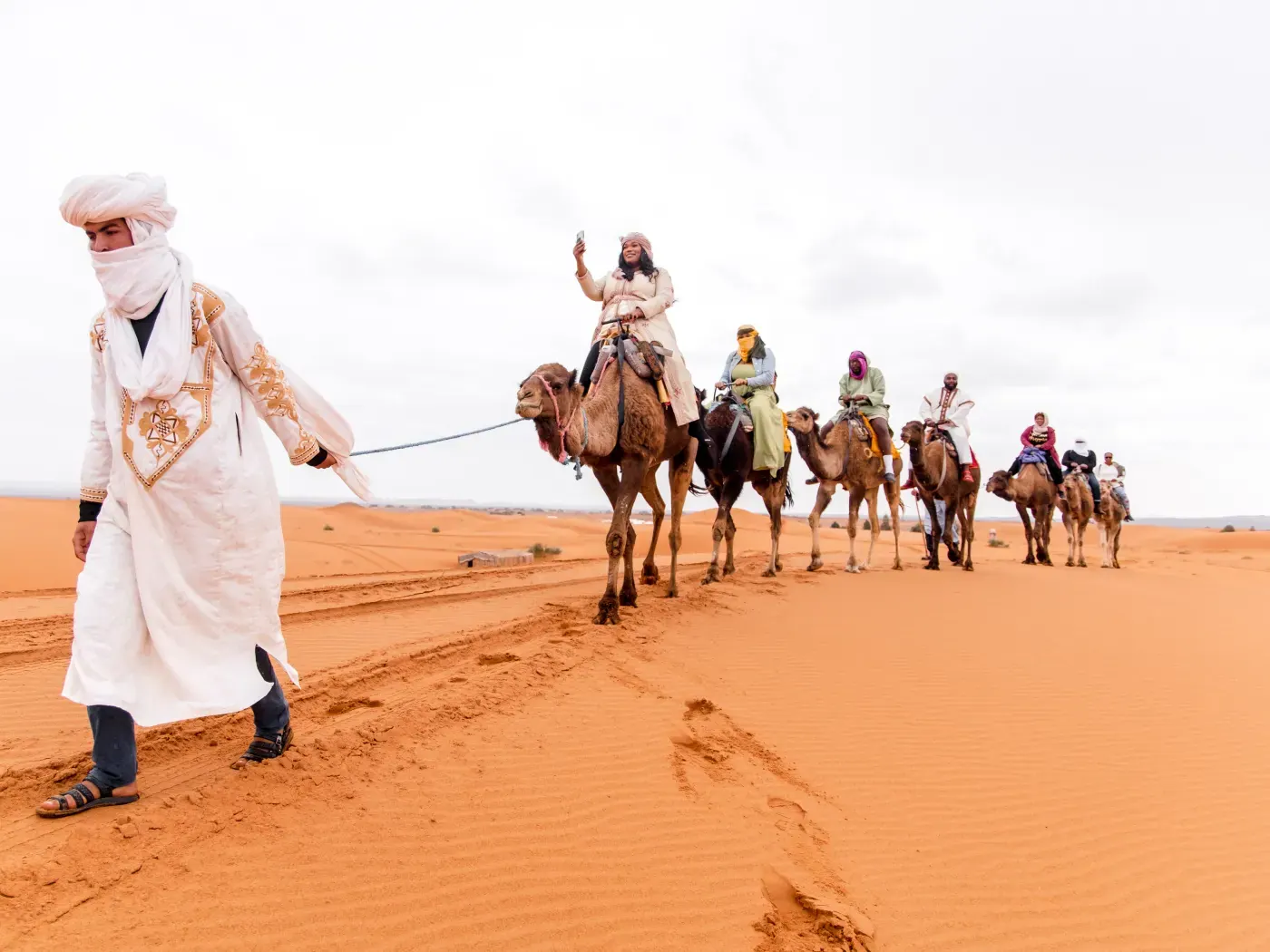
You arrive at Merzouga in the late afternoon. From there it is either a camel trek or a 4x4 transfer out to the camp among the dunes — we run both, and the 4x4 is the sensible choice for anyone with back problems or young children.
Dinner is at the camp, followed by drums around the fire. The dark is absolute once the fire dies down, and the stargazing is the part people describe most often afterwards.
Day 3: Sunrise, the Ziz valley and Fez
Sunrise over the dunes is worth the early alarm, and it is the last calm hour of the trip. After breakfast the third day is a long drive north — around eight hours to Fez.
The route runs up the Ziz valley, where a continuous ribbon of palm groves sits between red canyon walls. It is the most underrated stretch of the whole journey. You climb through Midelt, cross the Middle Atlas cedar forests, and pass Ifrane, an alpine-looking town that surprises most first-time visitors.
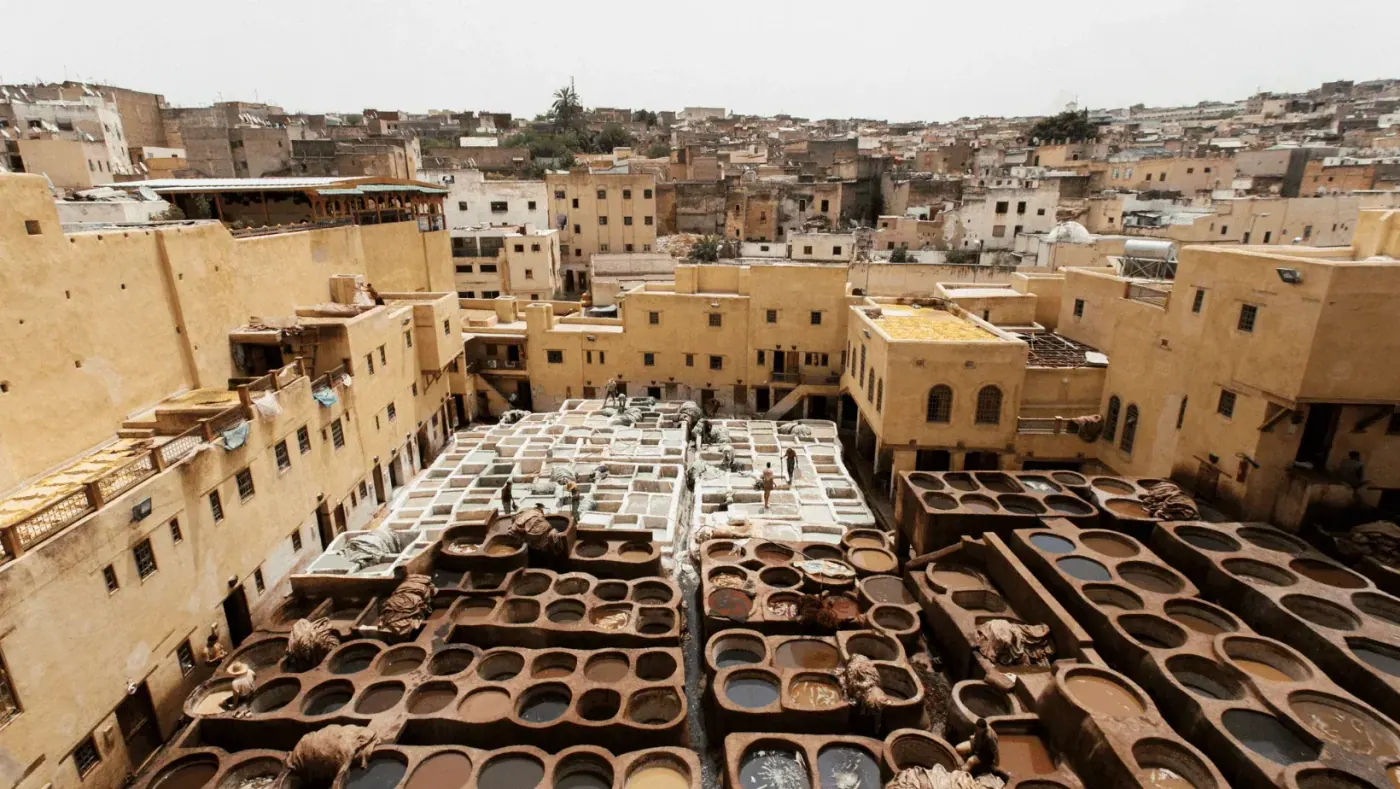
You reach Fez in the evening. Most people go straight to the riad and eat there; the medina can wait until the following morning.
Is three days enough?
For the crossing itself, yes. Three days gets you over the Atlas, through the gorges, a night in the Sahara and into Fez without cutting anything essential.
What three days does not give you is slack. Days one and three are long in the vehicle, and there is no free afternoon anywhere. If your priority is the desert rather than the transit, a four-day version adds a full day around Merzouga — nomad families, the seasonal lake, sandboarding — and changes the character of the trip considerably.
If you want the desert with no long drives at all, flying into Errachidia or Ouarzazate and starting closer to the dunes is worth considering.
Which direction: Marrakech to Fez, or Fez to Marrakech?
Both run equally well and the route is identical in reverse. Choose based on your flights. Marrakech has more direct connections from Europe, so most people arrive there; Fez is the better arrival point if you want to see the older medina while you are freshest.
One practical difference: arriving into Fez at the end means finishing in the more demanding of the two cities after three days on the road. Some travellers prefer to end in Marrakech, which is easier to navigate when tired.
What is included, and what to bring
Our private version includes an enclosed 4x4 with air conditioning, an English-speaking driver-guide, fuel, the desert camp with private bathroom, two nights’ accommodation, breakfasts and dinner at the camp. Lunches, drinks and entrance fees are not included.
Pack a warm layer regardless of season. Desert nights are cold even in summer, and the camp sits out in the open. Bring more water than you think you need, closed shoes for the gorge walk, and something to cover your head.
Charging is available at the camp but limited. A power bank removes the problem entirely.
Frequently asked questions
Roughly 20 hours of driving spread over three days — about seven hours on day one, four on day two and eight on day three, before stops.
It is efficient rather than relaxed. It covers the Atlas, the gorges and a Sahara night without omitting anything major, but there is no free time. A four-day version adds a full day in the desert.
No. The transfer to the desert camp can be made by 4x4 instead, which we recommend for anyone with back problems or travelling with small children.
Our standard camps have proper beds, thick blankets and private bathrooms with hot showers, plus electricity. Dinner is served in a communal tent, followed by music around the fire.
Yes, the route works identically in either direction. Choose based on your flights — Marrakech generally has more direct connections from Europe.