
Marrakech runs on a mix of Amazigh and Arab tradition, and it makes no attempt to be calm. Stallholders sing their own praises, the call to prayer carries over the sound of hammering metal, and the smell of cumin follows you down every lane. Here is what is worth your time.
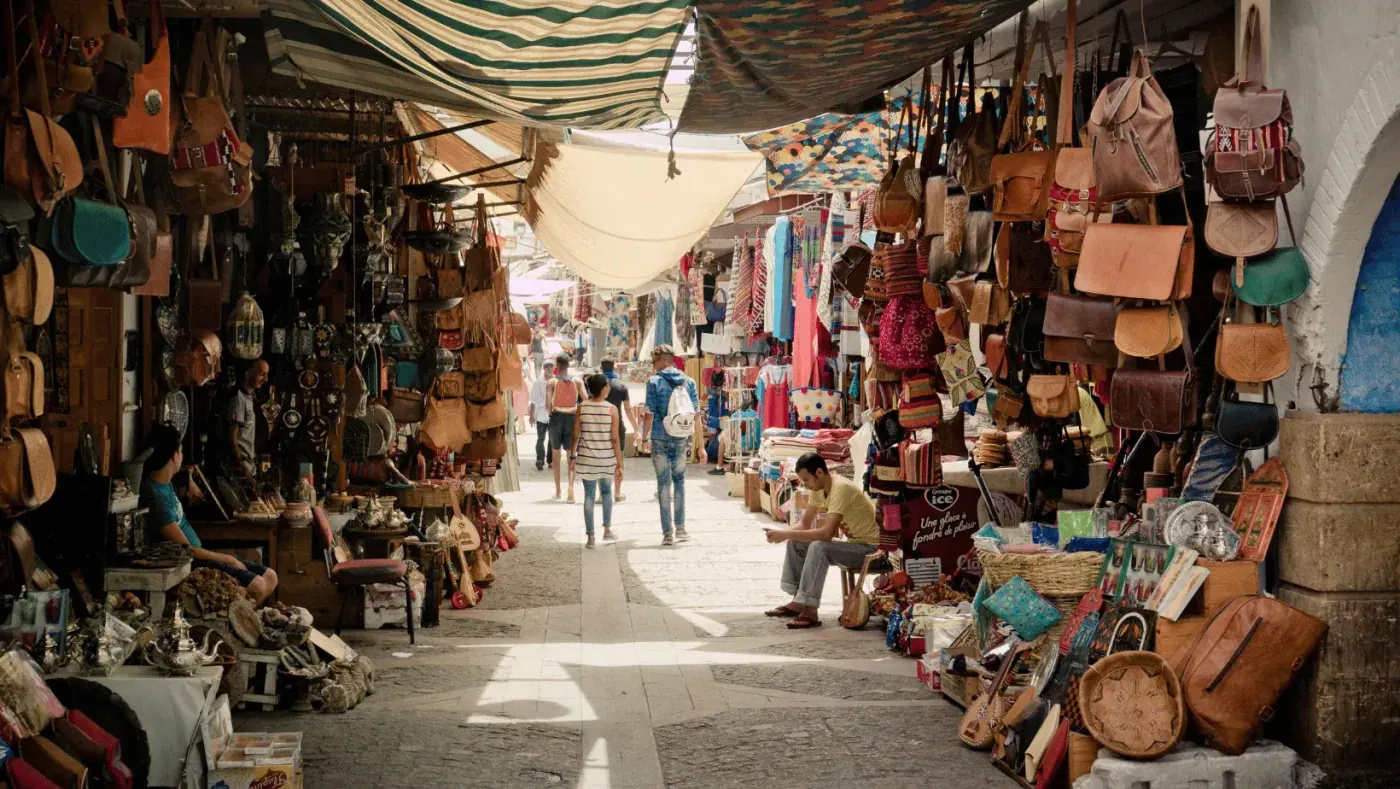
Get lost in the souks — deliberately
The souks north of Jemaa el-Fna are less a market than a district, and the best way to see them is to stop navigating. Souk Haddadine rings with metalworkers beating tin. Souk Cherratine smells of fresh leather. Souk des Babouches is wall-to-wall slippers, and La Criée Berbère is where the carpets are. You will come out somewhere unexpected. That is the point.
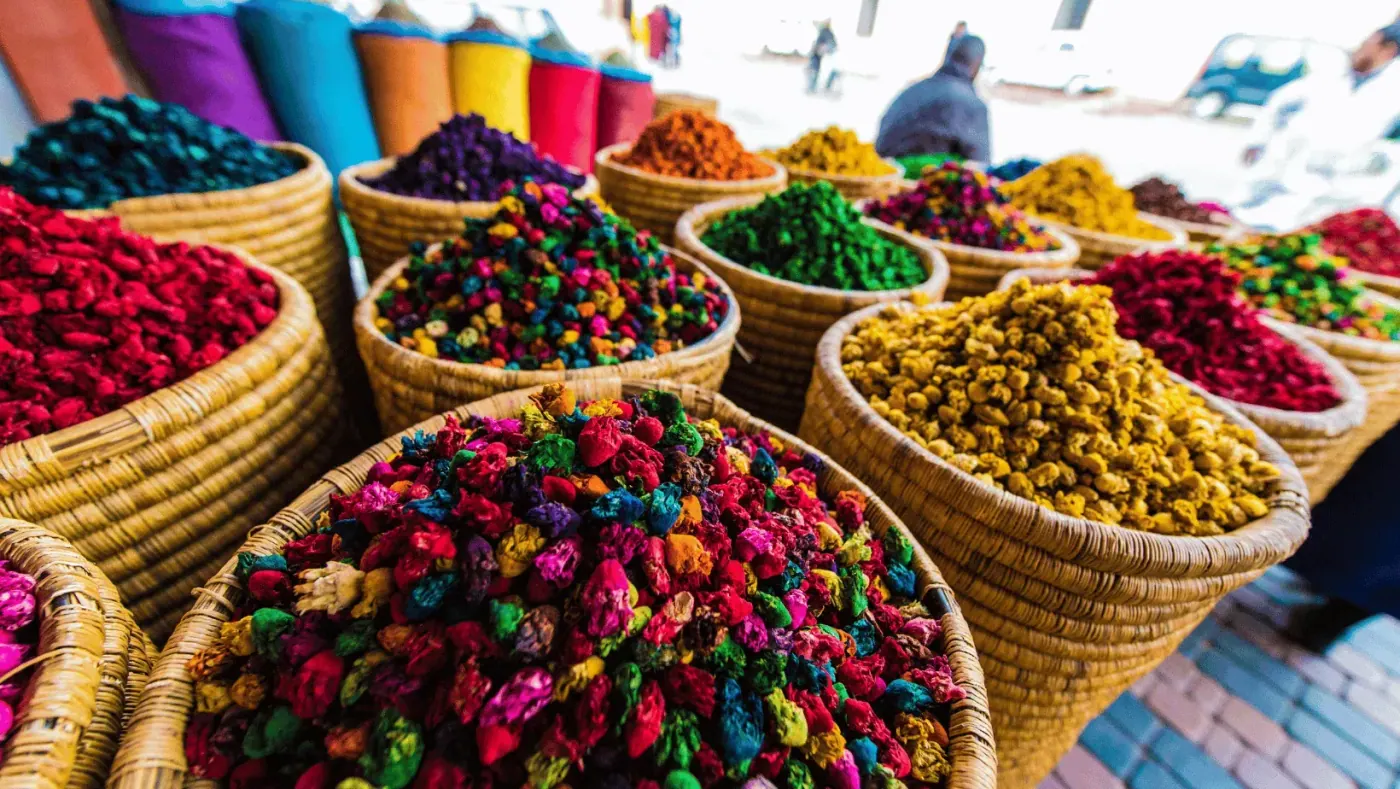
Bahia Palace
Built for the sultan’s grand vizier in the 1860s and enlarged again in the early 1900s, Bahia was meant to be the finest palace of its age — 150 rooms, Italian marble, painted cedar ceilings and stained glass. The courtyards are the real draw: orange trees, fountains and tilework that repays standing still for a minute. Go early; it fills up by mid-morning.
The neighbourhoods locals actually use
Marrakech is compact, and stepping just outside the tourist circuit changes the mood completely. Bab Doukkala, west of the medina and still inside the old walls, is best in the late afternoon when the shops slow down, shisha smoke drifts across the street and tagines start appearing. It is the same city at a quarter of the volume.
Jardin Majorelle
The cobalt villa and garden created by the painter Jacques Majorelle — the blue is named after him — were bought and restored by Yves Saint Laurent in the 1980s. Cacti and bamboo from around the world play off the blue and yellow paintwork, and the Berber Museum and YSL exhibition are both genuinely good. Book a timed ticket in advance or expect to queue.
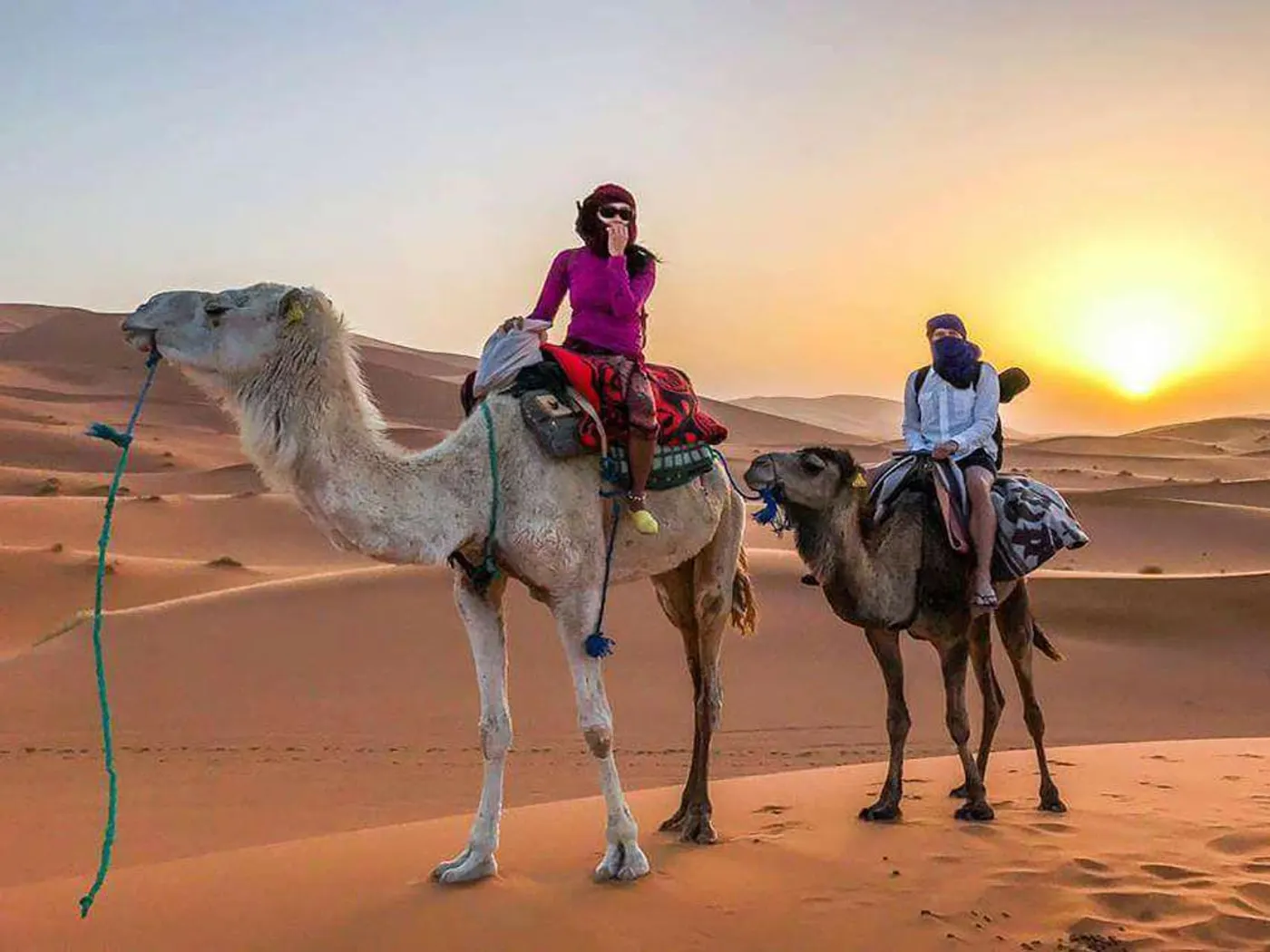
Jemaa el-Fna, twice
Visit the great square once in daylight and once after dark, because they are different places. By day it is orange-juice carts, snake charmers and heat coming off the stone. After sunset the food stalls go up, the musicians arrive, and the whole square turns into an open-air dinner. For the view, take a mint tea on a café terrace overlooking it and watch the Koutoubia minaret catch the last light.
Eat on a rooftop
Rooftop dining in Marrakech ranges from polished cocktail terraces to a plastic table wedged between a satellite dish and someone’s laundry. Both are worth doing. Rising above the noise of the medina to eat among minarets and clay rooftops, with the Atlas sometimes visible on a clear evening, is one of the city’s simple pleasures.
Stay in a riad
A riad is a house built inward around a courtyard, so the street side gives nothing away — then a heavy studded door opens onto tilework, a fountain and often a plunge pool. After a day in the souks that silence is the best thing money can buy in Marrakech. Riads range from simple to extravagant, and the smaller ones can usually be booked whole for a family.
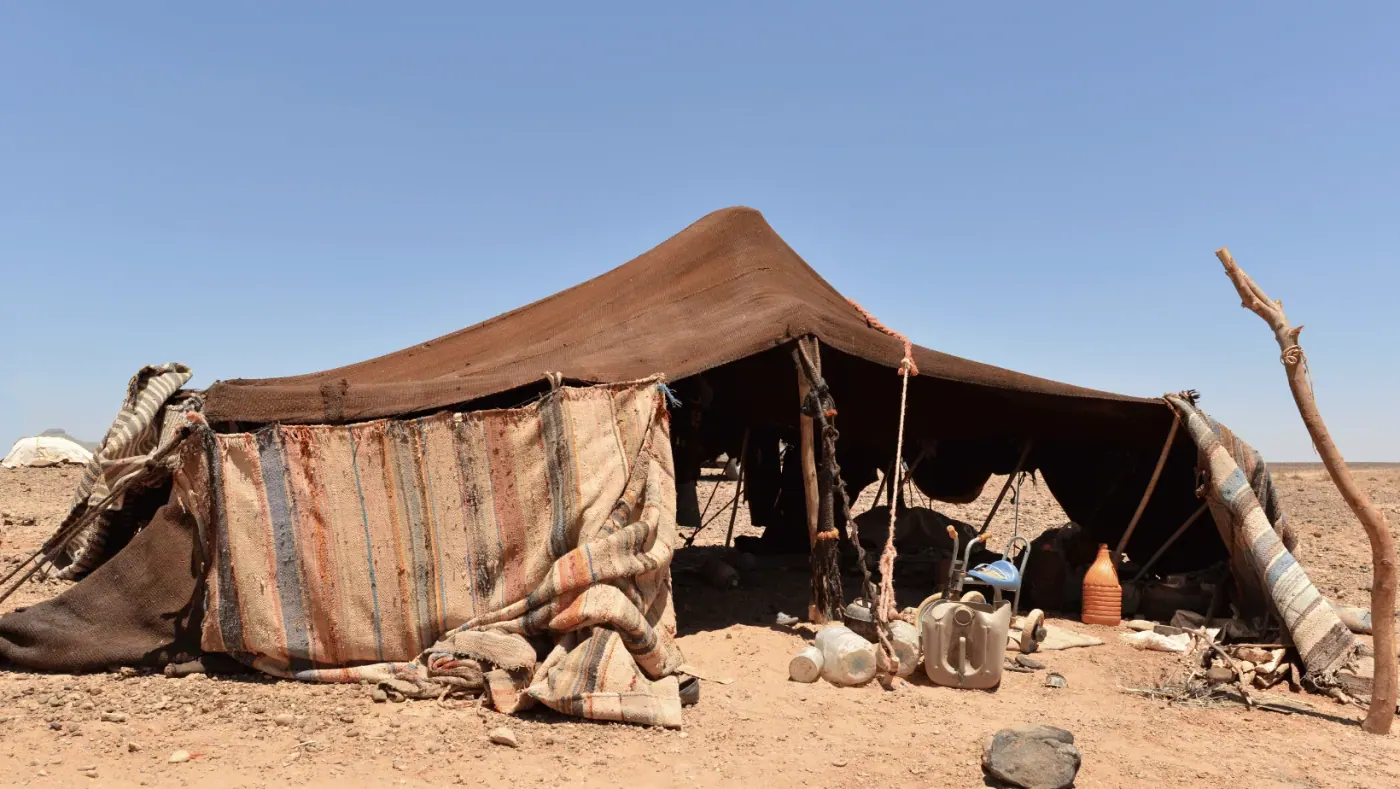
How long to stay
Two full days covers the headline sights without rushing. Three lets you add a day trip — the Ourika Valley and the High Atlas, the Agafay stone desert at sunset, or Ouzoud Waterfalls. If the Sahara is on your list, Marrakech is the usual starting point for three- to five-day desert routes.
Best time of year to visit Marrakech
Marrakech is a year-round city, but the season changes the trip completely. Spring (March to May) and autumn (September to November) are the sweet spots: daytime temperatures in the low-to-mid twenties, gardens in full colour, and evenings warm enough to eat outside. These are also the busiest months, so riads book up well ahead.
Summer (June to August) regularly passes 40°C. It is doable if you plan around it — souks and palaces in the morning, a pool or a hammam in the afternoon, the square after sunset — and prices drop noticeably. Winter (December to February) is the quiet secret: bright, dry days around 18–20°C, snow on the Atlas peaks an hour away, and cold nights that make a riad fireplace worth having.
How many days do you need in Marrakech?
Two full days covers the essentials without rushing: one for the medina, souks and Jemaa el-Fna, one for the palaces and gardens. Three days is the number we suggest most often, because it leaves room for a day trip — the Ourika Valley, the Agafay desert at sunset, or the Ouzoud Waterfalls — without cutting the city short.
Four or more days makes sense if Marrakech is your base for the Sahara. Most desert routes to Merzouga start here and take three days minimum; adding them to a city stay is the most common way travellers combine the two. If you only have 48 hours, skip the far day trips and give the time to the medina instead.
Getting around the city
The medina is walkable and largely closed to cars, which is both its charm and its challenge — lanes are narrow, unsigned and full of scooters. Download an offline map before you arrive and accept that you will get lost at least once; it is part of the experience and the medina is small enough that you always resurface somewhere recognisable.
For anywhere outside the walls — Gueliz, the Palmeraie, Jardin Majorelle — use a petit taxi and agree the fare before setting off, or ask your riad to call one. Horse-drawn calèches circle the ramparts and are pleasant at sunset, though they are priced for tourists rather than transport.
Frequently asked questions
Inside the medina, in a riad, if you want to be walking distance from the souks and Jemaa el-Fna. Gueliz, the modern quarter, is quieter and better for restaurants and nightlife but means a taxi to the old city. First-time visitors almost always prefer the medina.
The medina is, and cars barely enter it. Everything outside the walls needs a petit taxi. Wear shoes you can cover several kilometres in on uneven ground.
Two days for the essentials, three if you want a day trip as well. Four or more if you are using the city as the starting point for a Sahara desert tour.
Yes, and most people do. Merzouga and the Erg Chebbi dunes are a three-day round trip; shorter two-day options go to Zagora instead, which is closer but has smaller dunes.
Yes, and it is expected rather than confrontational. Start at roughly half the opening price, stay friendly, and be willing to walk away. Fixed-price co-operatives exist if you would rather not.
Want to see this for yourself?
Every one of our tours is private and shaped around you. Tell us your dates and we will put a route together — usually within 24 hours.