
Most articles answering this question hand you a list of ten places and leave you to work out how they fit together. That is the hard part. Morocco is roughly the size of France with its best bits at opposite corners, so the real question is not what is worth seeing — nearly all of it is — but which combinations actually work in the time you have. If you want the places themselves described, read our guide to the best places to visit in Morocco; this one is about choosing between them.
Start with the map, not the list
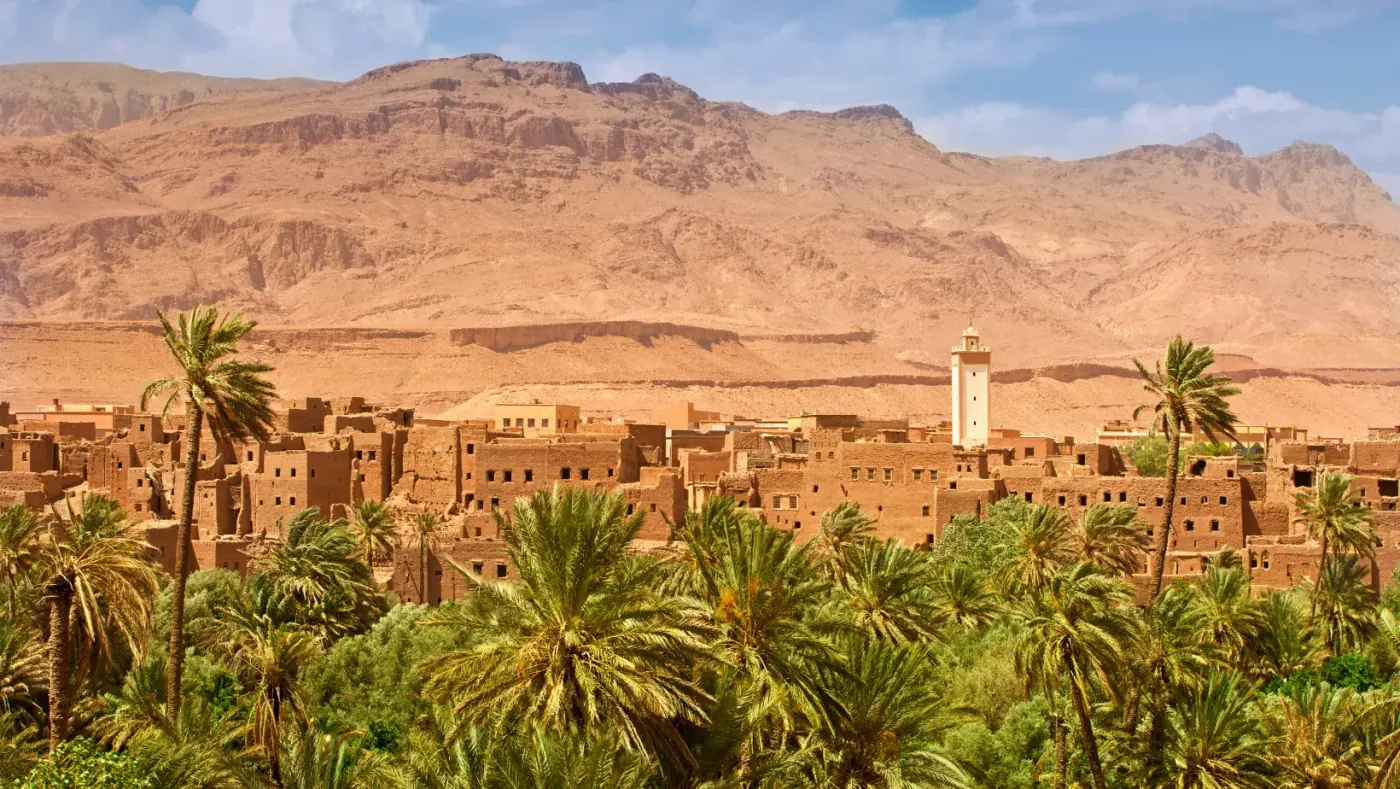
Morocco divides into four practical zones. The imperial cities of the north and centre — Fes, Meknes, Rabat — plus Marrakech to the south. The Atlantic coast, from Tangier down through Essaouira to Agadir. The mountains, meaning the Rif in the north and the Middle and High Atlas through the middle. And the south-east, meaning the kasbah valleys and the Sahara.
Almost every workable itinerary is an arc through two or three of these, not a tour of all four. The desert alone consumes two days of driving to reach and leave from anywhere.
The single most useful thing to internalise is that Chefchaouen and the Sahara are at opposite ends of the country. Wanting both in one week is the most common planning mistake we see.
Choose by how many days you have
Four days or fewer: one city and its surroundings. Marrakech with the Atlas foothills or the Agafay desert, or Fes with Meknes and Volubilis. Do not attempt the Sahara.
Five to six days: one city plus the desert, done properly. Marrakech to Merzouga and back, or Marrakech to Fes across the desert one way.
Seven to eight days: two cities plus the desert, or one city plus the desert plus the coast. This is where Morocco starts to feel unhurried.
Ten days: Marrakech, the Sahara, Fes and Essaouira at a civilised pace, with a free day or two.
Two weeks: add the north — Chefchaouen, Tangier, the Rif — or go deeper into the south towards the Draa valley and M’hamid.
Choose by what you actually want
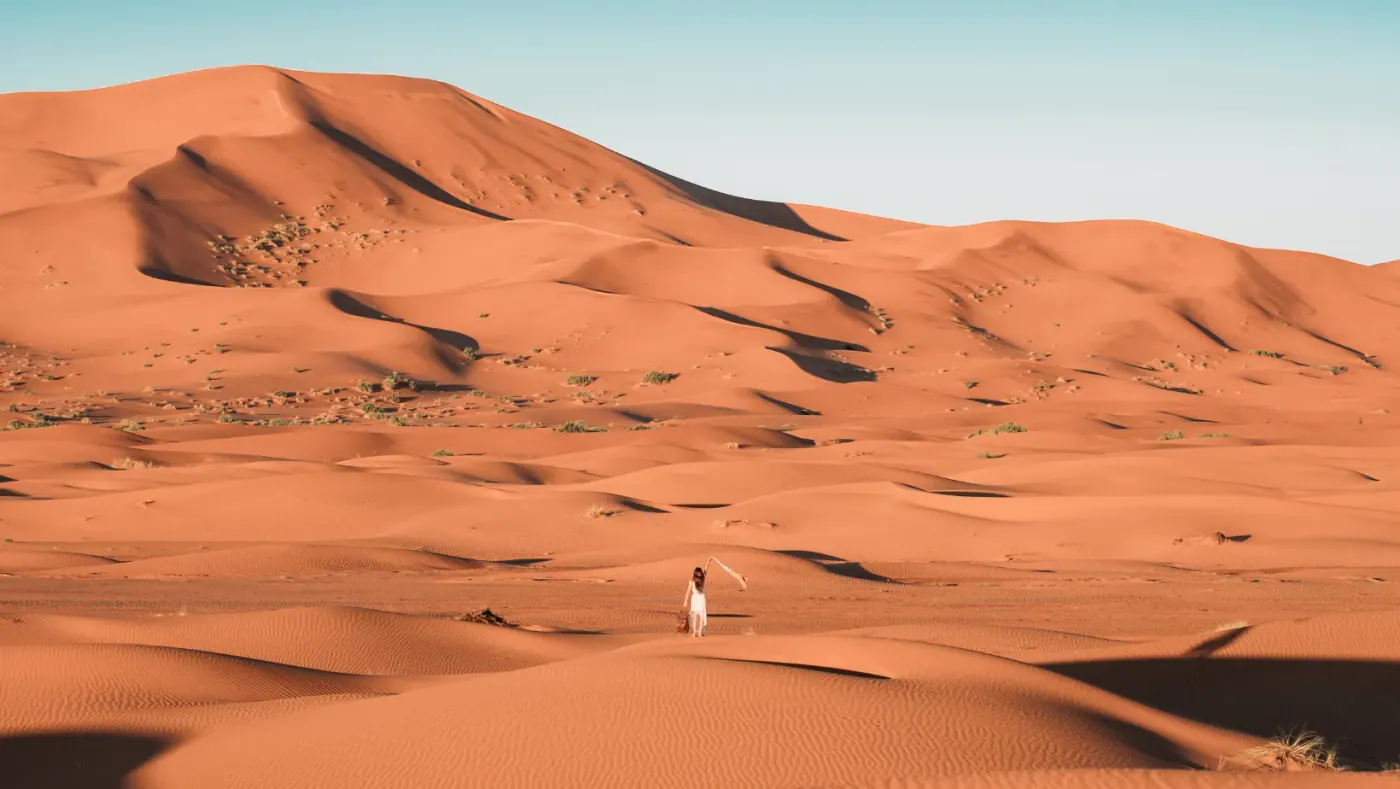
For the desert: Merzouga and the Erg Chebbi dunes. Zagora is closer but its dunes are low and scattered; Erg Chigaga is more remote and needs an extra day.
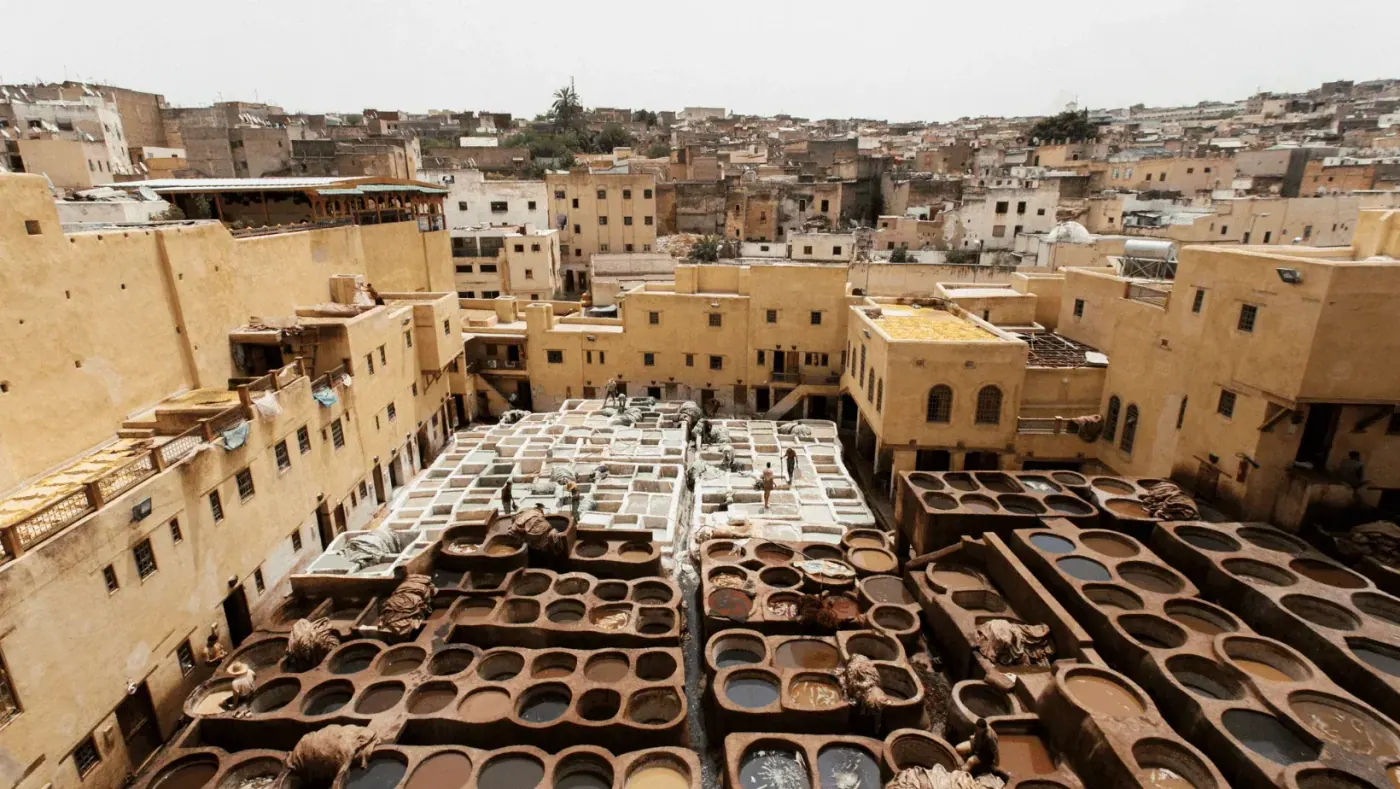
For old cities and craft: Fes above everything else. The medina is the largest and least altered, and the workshops are working rather than displaying.
For atmosphere and energy: Marrakech. Also the easiest arrival point and the best base for day trips.
For mountains and walking: the High Atlas around Imlil and Toubkal, or the gentler Ourika and Ait Bougmez valleys.
For the coast and slowing down: Essaouira. Windy, walkable, excellent fish, and three hours from Marrakech.
For blue-walled photographs: Chefchaouen — but only if your trip is already in the north.
Choose by season
Spring, March to May: the best all-round window. Everything is open, the valleys are green, and the desert is warm rather than dangerous.
Autumn, September to November: nearly as good, with warmer sea temperatures on the coast and the harvest in the oases.
Summer, June to August: heavily favours the Atlantic coast and the mountains. Marrakech and the desert routinely exceed 40°C, which makes midday sightseeing unpleasant and desert days genuinely limiting.
Winter, December to February: excellent for the cities, which are mild and uncrowded, and beautiful in the desert by day. Desert nights approach freezing, and High Atlas passes can close briefly after snow.
Choose by where you fly into
Marrakech has the most direct European connections and sits closest to the Atlas, the Agafay desert and Essaouira. It is the default for a reason.
Fes is the better arrival if the medieval city matters most to you, and it shortens the drive to the Sahara by roughly two hours compared with Marrakech.
Casablanca is the largest hub with the widest long-haul choice, but the city itself holds little for visitors. Treat it as an arrival point and move on the same day.
Tangier suits a northern route — Chefchaouen, Meknes, Volubilis, Fes — and works well as one end of a two-week itinerary.
Agadir is a beach-holiday airport, useful for Souss-Massa, Paradise Valley and the Anti-Atlas, but a long way from the classic circuit.
Combinations that work
Marrakech → Atlas → Ait Ben Haddou → Dades → Todra → Merzouga → Fes. The classic crossing, five days at a comfortable pace, and everything is on the way to something else.
Fes → Chefchaouen → Tangier → Rabat. A northern loop with no desert, well suited to a shorter trip or a second visit.
Marrakech → Essaouira → Marrakech. Two or three days, minimal driving, a complete change of climate and pace.
Marrakech → Agafay or the Ourika valley. Half a day out, back for dinner. The right answer when the Sahara does not fit.
Combinations that do not
Chefchaouen plus the Sahara in under ten days. They are at opposite ends of the country and you will spend the trip in the vehicle.
Three cities plus the desert in a week. Something gets three hours where it needed a day, and it is usually Fes.
Essaouira as a day trip from Marrakech. Three hours each way for a few hours in a town that deserves an overnight.
The Sahara in a single day from Marrakech. Nothing sold as a one-day Sahara trip reaches real dunes; what you get is Agafay, which is stony desert, not the Erg.
If you only get one trip
Ten days, arriving in Marrakech and leaving from Fes. Three nights Marrakech, the crossing over the Atlas with a night in Dades, two nights in the desert including a full day there, then north through the Ziz to Fes for two nights, with a day for Volubilis and Meknes.
That route gives you an imperial city at each end, the mountains, the kasbah valleys, the Sahara and a Roman site, without repeating a single stretch of road.
If you have seven days rather than ten, cut Volubilis and one Marrakech night rather than cutting the desert day. The desert day is the part people remember.
Choosing by who you are travelling with
With small children, shorten the driving before anything else. Marrakech plus the Atlas foothills, or Essaouira on the coast, beat an ambitious loop every time. From about eight, the full desert route works well.
Travelling solo, the shared desert tours are the efficient answer — you avoid driving, the cost drops considerably, and you meet other travellers. Morocco is comfortable for solo visitors, including women, with ordinary city precautions.
As a couple, the desert camps and the riads are what most people remember. A private tour costs more but buys you the schedule, which matters more than the vehicle.
In a larger group, a minibus and a private itinerary become better value per person than any shared option, and you stop negotiating with strangers about when to leave.
Two mistakes that cost people their trip
The first is booking flights before deciding the route. Flying in and out of the same airport forces a loop, and a loop means repeating roads. Open-jaw tickets — into Marrakech, out of Fes — often cost the same and remove an entire wasted day of backtracking.
The second is treating driving times as if they were motorway times. Google will tell you Marrakech to Merzouga is about nine hours. That figure assumes no stops, no photographs, no lunch and no traffic leaving Marrakech. Plan for eleven and you will not be disappointed.
A third, smaller one: booking the desert for the last night before an early flight. If anything delays the road north, you miss the plane. Leave a buffer night in the departure city.
One last practical point
Whatever route you settle on, book the desert camp earlier than everything else. Camps at Erg Chebbi are finite in a way hotels are not — there are only so many tents in the dunes, and the good ones fill months ahead in spring and autumn. Cities always have another riad; the desert does not always have another camp.
Frequently asked questions
Marrakech, the Sahara at Merzouga and Fes, linked by the route over the High Atlas. That covers cities, mountains, kasbah valleys and desert without repeating any road.
Five to six for one city plus the desert. Seven to eight for two cities plus the desert. Ten for a comfortable pace with free days. Four or fewer means staying near one city.
Only if your itinerary is already in the north. It is four hours from Fes and much further from anywhere else — adding it to a Sahara trip costs about two days of driving.
Marrakech is easier to reach and to navigate, and better placed for day trips. Fes has the older, larger and less altered medina. With ten days you can have both.
March to May and September to November. Summer is very hot inland and better spent on the coast; winter suits the cities but desert nights approach freezing.
No. Merzouga is around nine hours away. One-day desert trips go to Agafay, which is stony desert rather than sand dunes. Three days is the realistic minimum for the Erg.