
Morocco is one of the more welcoming countries you can take children to. They are genuinely liked here, waiters make a fuss of them, and nobody minds noise in a restaurant. The hard part is not the culture, the food or the safety — it is the distances. Get the driving right and a family trip works beautifully. Get it wrong and you spend the holiday negotiating with a car full of bored children.
Is Morocco good for children?
Yes, with the usual caveats about pace. Moroccan society is openly affectionate towards children, and travelling with them tends to soften every interaction you have. Shopkeepers hand out sweets, waiters bring extra bread, and the hard-sell in the souks noticeably eases when you have a toddler on your hip.
Practically, the country is easy. Nappies, formula and baby food are available in any supermarket in the cities. Pharmacies are excellent and pharmacists speak French, often English. Riads are used to families and many have interconnecting rooms or family suites.
The genuine difficulties are heat in summer, the length of the drives, and medina streets that do not accommodate a pushchair. None of those is a reason not to come; all of them shape how you should plan.
The driving is the whole planning problem
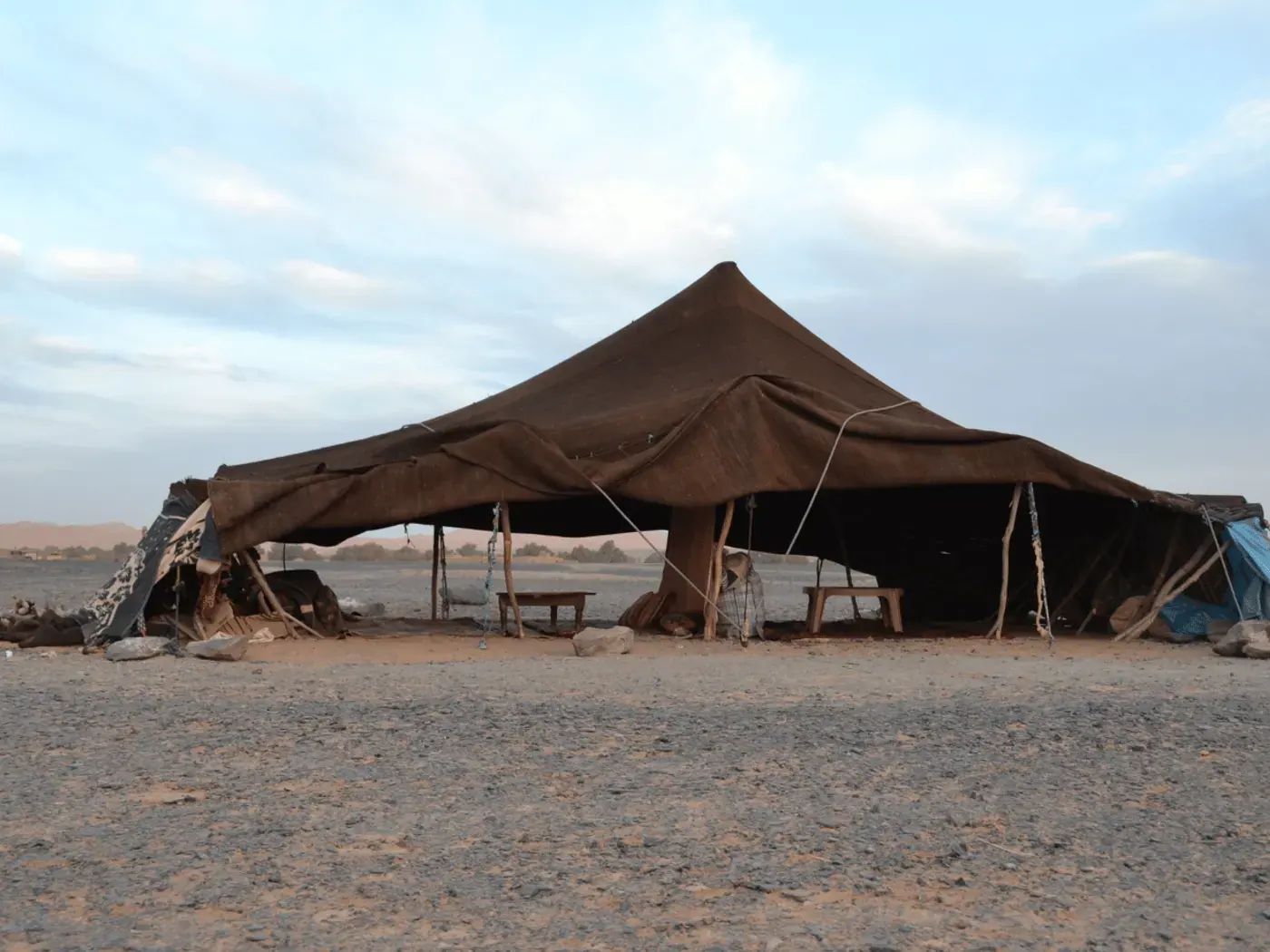
Marrakech to Merzouga is about nine hours. Fes to Merzouga is around seven. These are not motorway hours — they are mountain passes with continuous bends. Adults find them scenic; children find them long.
The workable rule is a maximum of four to five hours of driving in a day with children under ten, and never two long days consecutively. That single constraint reshapes most standard itineraries.
A private tour matters more with children than without. You stop when someone needs the loo, you break for an hour when the mood collapses, and you skip a monument without negotiating with fifteen other people. On a shared tour none of that is available.
Motion sickness is common on the Tizi n’Tichka and the Dades road. Bring whatever works for your child and give it before you set off rather than after the first incident.
Which ages suit which trips
Under three: stay in one or two places. Marrakech plus the Atlas foothills, or Essaouira on the coast, both work well. The Sahara is a long way for very little payoff at that age.
Four to seven: the desert becomes worth it, but only with a slower route — four days rather than three, with the drive broken properly. Camel rides are usually a hit in short doses; an hour is plenty.
Eight to twelve: close to ideal. Old enough for the drives, young enough to find dunes and kasbahs genuinely exciting. This is the age group that gets the most out of a full Morocco loop.
Teenagers: everything is open, including the trekking, sandboarding and quad biking that younger children cannot do. The constraint becomes their tolerance for monuments rather than their tolerance for cars.
A realistic family itinerary
Days 1–3, Marrakech. One guided morning in the medina — mornings, not afternoons, because the heat and the crowds both build. Then the Jardin Majorelle, and an afternoon at the hotel pool. Jemaa el-Fna after dark is the highlight for most children, though be aware of the animal acts.
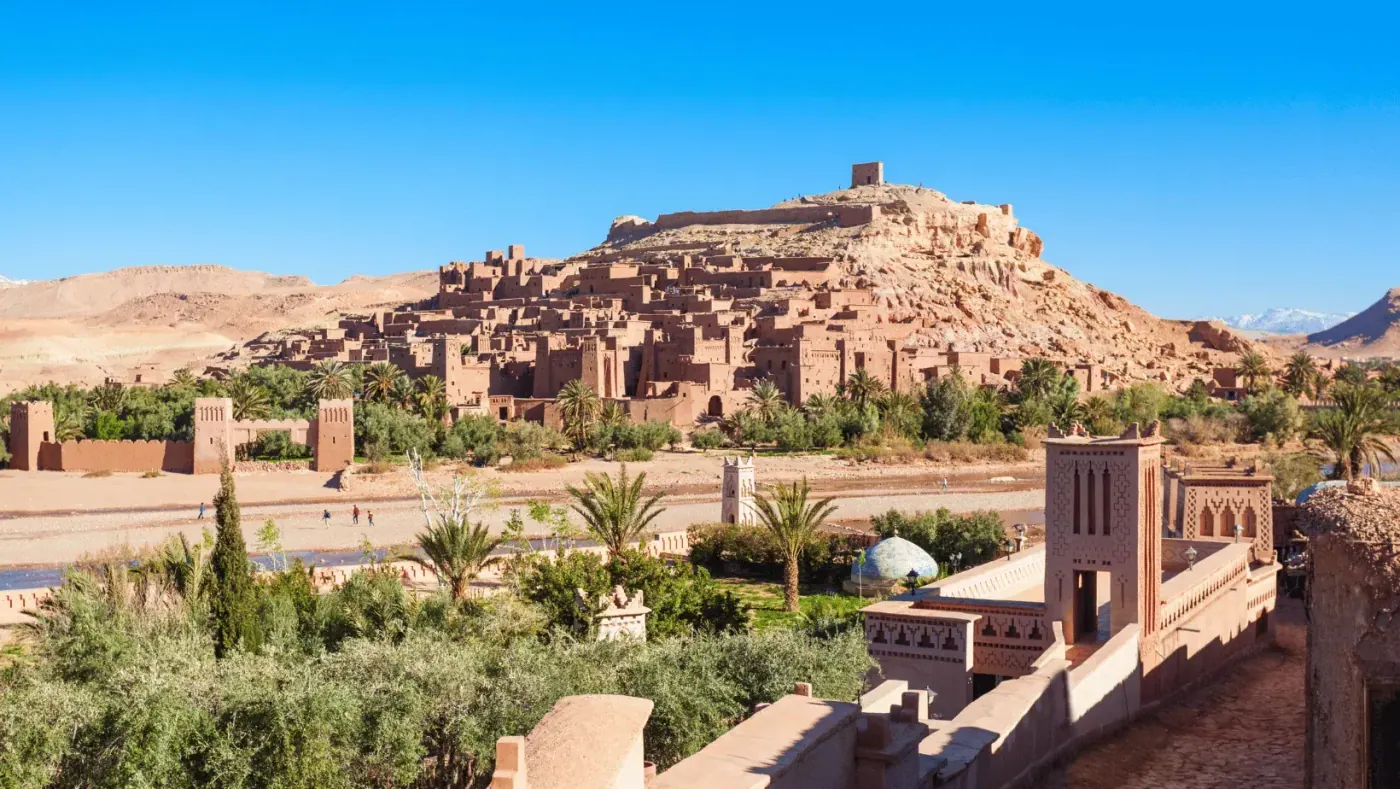
Day 4, over the High Atlas to Ait Ben Haddou. Four hours of driving broken by the pass and a long lunch. The ksar is a genuine castle to climb, which is exactly what it looks like to an eight-year-old.
Day 5, Dades or Todra. A short drive and a walk through the gorge where the road narrows between vertical walls. Easy, dramatic and free.
Day 6, into the desert. Arrive mid-afternoon, camel ride or 4x4 to the camp, sunset from a dune, dinner and drumming. Children almost universally love the camp.
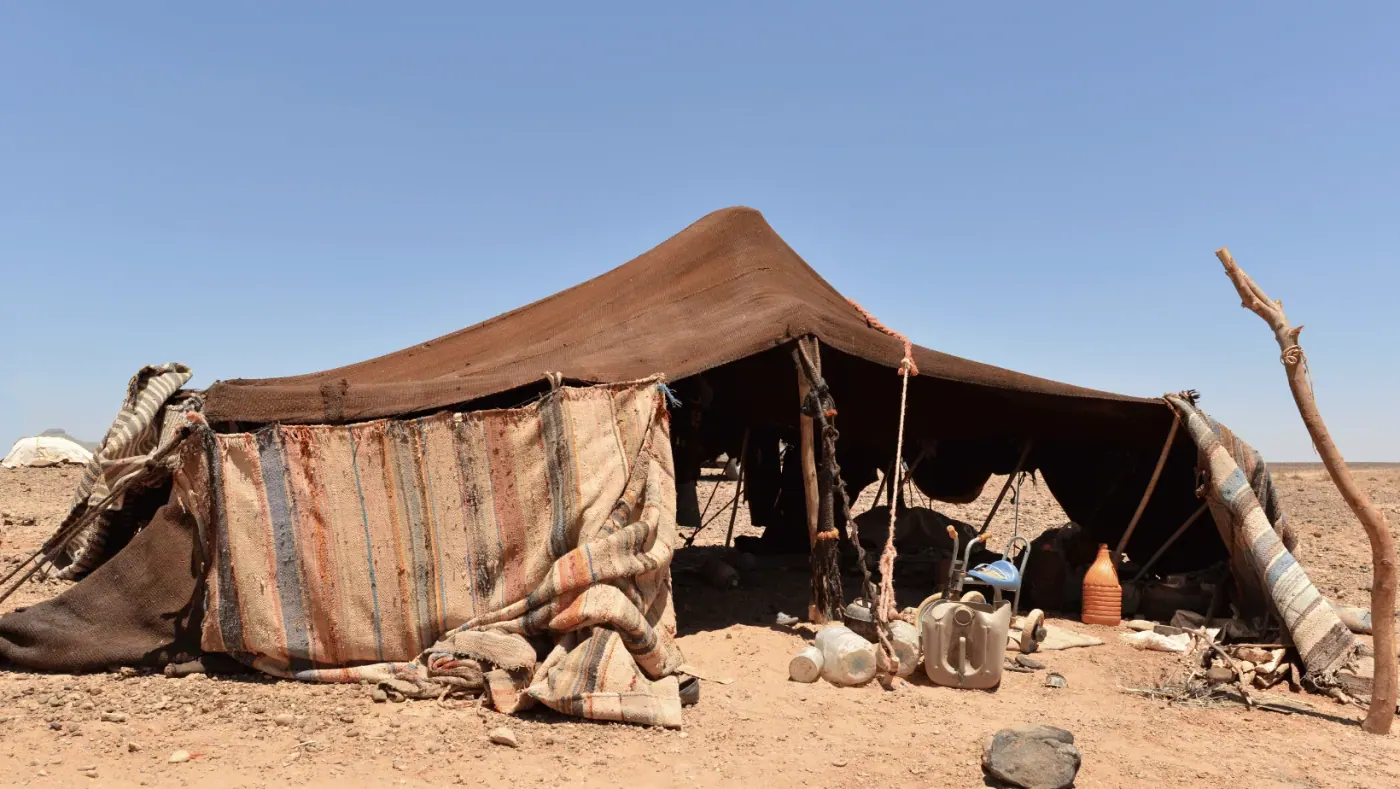
Day 7, back north, or a full day in the desert if you have the time. The 4x4 day with the nomad families is more interesting to older children than the dunes themselves.
Food children will actually eat
Moroccan food is mild rather than spicy. Harissa is served on the side, not cooked in. The staples work well for cautious eaters: bread with everything, chicken or lamb tagine, couscous on Fridays, brochettes, chips, omelettes.
Tagine is essentially a slow-cooked stew and most children take to it. The sweet ones — chicken with apricot, lamb with prunes — go down better than the savoury versions.
Fresh orange juice is everywhere and costs almost nothing. Mint tea is very sweet, which children tend to appreciate more than adults do.
Bring familiar snacks for the car. Supermarkets in cities stock European brands; petrol stations on the desert route mostly do not.
Health and practical care
Bottled water only, including for teeth. It costs very little and removes the most common cause of a ruined family holiday.
The sun is stronger than it feels, particularly at altitude in the Atlas and in the desert. Hats and high-factor sunscreen are not optional, and long sleeves are more effective than repeated applications.
Pharmacies are widespread, well stocked and cheap. Rehydration salts, children’s paracetamol and anti-diarrhoeals are all available without a prescription.
Take travel insurance that covers children and check it includes the activities you plan. Camel riding and quad biking are excluded by some policies.
What to pack that you might not think of
A carrier rather than a pushchair. Medina streets are narrow, uneven and frequently stepped, and a pushchair becomes something you carry.
Warm layers for the desert. Nights at the camp are cold in every season, and children feel it before adults do.
A power bank. Camp electricity is limited and tablets are the difference between a peaceful drive and a fraught one.
Closed shoes for the gorges, and swimwear — most riads and desert hotels have a pool, and it will be used more than any monument.
When to go with children
April, May, September and October are the comfortable months. Warm without being punishing, and the desert is pleasant by day.
July and August are hard with children. Marrakech and Merzouga regularly exceed 40°C, which limits everyone to early mornings and swimming pools.
Winter works for the cities and the coast, and the desert is beautiful, but camp nights get close to freezing. Manageable with the right clothing, but worth knowing in advance.
Things worth skipping
Long medina shopping expeditions. Forty minutes is entertaining; three hours is a meltdown.
The snake charmers and monkey handlers on Jemaa el-Fna. The animals are poorly treated and the handlers demand payment aggressively once a child has been photographed with one.
Back-to-back long drive days. If the itinerary you are offered has two eight-hour days in a row, ask for it to be restructured. Any decent operator will.
Where to stay with a family
Riads are the characteristic Moroccan accommodation — old houses built inward around a courtyard, usually with a plunge pool and a roof terrace. They suit families better than they look as though they will: the courtyard is enclosed, there is nowhere for a child to wander off to, and the staff are typically hands-on in a way large hotels are not.
The drawback is stairs. Riads are vertical, often three floors around the courtyard with no lift, and rooms are reached by narrow staircases. With a toddler and luggage, ask for a ground-floor room when you book.
Larger hotels outside the medina offer pools, lifts and parking, and are easier with very young children or a lot of kit. The trade-off is that you are ten minutes by taxi from everything worth walking to.
In the desert, the camps are the highlight. Beds are real, blankets are heavy, and the better camps have private bathrooms with hot water. Children generally find sleeping in a tent among dunes the most memorable night of the trip.
Keeping children entertained on the road
The drives are the part that needs managing. Downloaded films and audiobooks are worth more than any toy, and a power bank means they last the distance.
Break the journey deliberately rather than opportunistically. A planned stop at a viewpoint, a café or a roadside cooperative every ninety minutes works far better than driving until someone complains.
Give older children something to look for — Barbary macaques in the Middle Atlas cedar forests, storks nesting on minarets and ruins, the changing colour of the rock as you cross the Atlas. It converts the drive from dead time into part of the trip.
Camel rides work best in short doses. Twenty minutes to the camp at sunset is memorable; an hour and a half is a complaint.
Frequently asked questions
Yes. Morocco is one of the safer countries in the region for visitors, and children are treated with real warmth. Normal city precautions apply, and the main practical risks are heat and long drives rather than crime.
Eight to twelve is close to ideal — old enough for the driving, young enough to find dunes and kasbahs exciting. Under threes are better suited to a single base such as Marrakech or Essaouira.
From about four, if the drive is broken across enough days. The camel transfer can be swapped for a 4x4, which we recommend for small children.
Moroccan food is mild, not spicy. Bread, chicken tagine, couscous, brochettes, chips and omelettes are all widely available and generally go down well.
A carrier is far more useful. Medina streets are narrow, uneven and often stepped, and a pushchair ends up being carried.
Seven to ten days. That covers a city, the Atlas and the desert at a pace that does not exhaust anyone. Under five days, stay closer to one base.